
It has been more than a month since I wrote a piece on my hometown Hajipur (refer to the post ‘Hajipur: A Forgotten Legacy’ on the blog feed). While the post covered a brief history of Hajipur, it did not shed light on the architectural marvels that exists in this historic town. These structures have withstood the onslaught of time and are a witness to the historical narratives that have unfolded here. Apart from built heritage, there are sites of sacred significance which have a strong association with mythological chronicles of the region. So, let’s explore these sites:
Ramchaura Mandir
Located on southern extremity of the town, this temple is accessed via Konhara Ghat-Jadhua Road. Believed to be the seat of sages or rishis, Hajipur was frequently traversed by saints and scholars. It is said that when Lord Ram was on his way to Janakpur, he crossed River Ganga and left his footprint or padchinh at this place. Those footmarks are considered an important sacred relic and hence were enclosed in a temple complex with other historic structures. Those structures have been demolished over time and a new temple has been constructed.
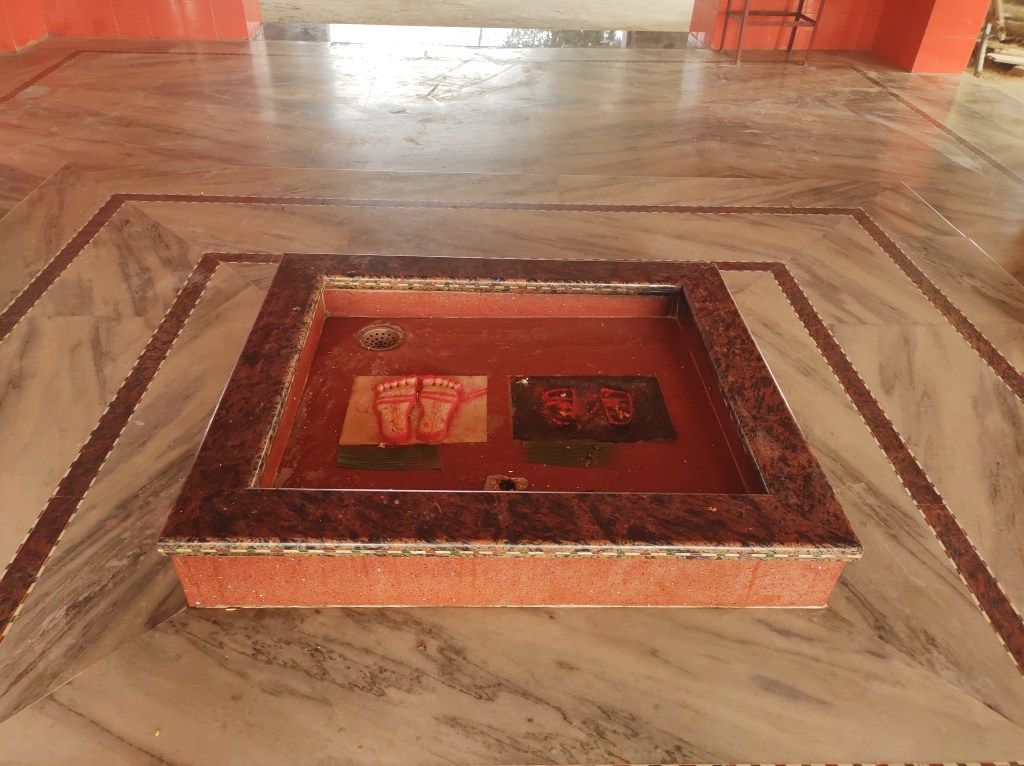
It is also worthwhile to notice that the venerated footprint lies on 15-20 feet high mound, which according to some scholars might be remains of an old stupa. The Chinese traveler Hiuen Tsang, who visited India in 7th Century CE, mentions about a Svetapura Monastery located in this region. Scholars have identified the site of this monastery as present-day Hajipur. In 1992-93 and 1997-98, K. P. Jayaswal Research Institute, Patna had conducted an excavation near the temple in which remains of Chalcolithic Period (1600 BCE) were found. However, since only a small area was excavated, the research was inconclusive of whether the site of Ramchaura was the mound of a stupa[i]
Grave of Haji Ilyas
Haji Ilyas or Shamshuddin Ilyas, the king of Bengal, was the founder of Hajipur as we know it today. He was buried along the bank of Gandak River and presently his grave is situated near G.A. Inter School, accessed via S.D.O. Road. Unlike his contemporaries, his grave is not protected by an elaborate tomb but a modern structure which has been constructed about a decade ago. Local community consider this site to be extremely sacred.

Pathar Masjid
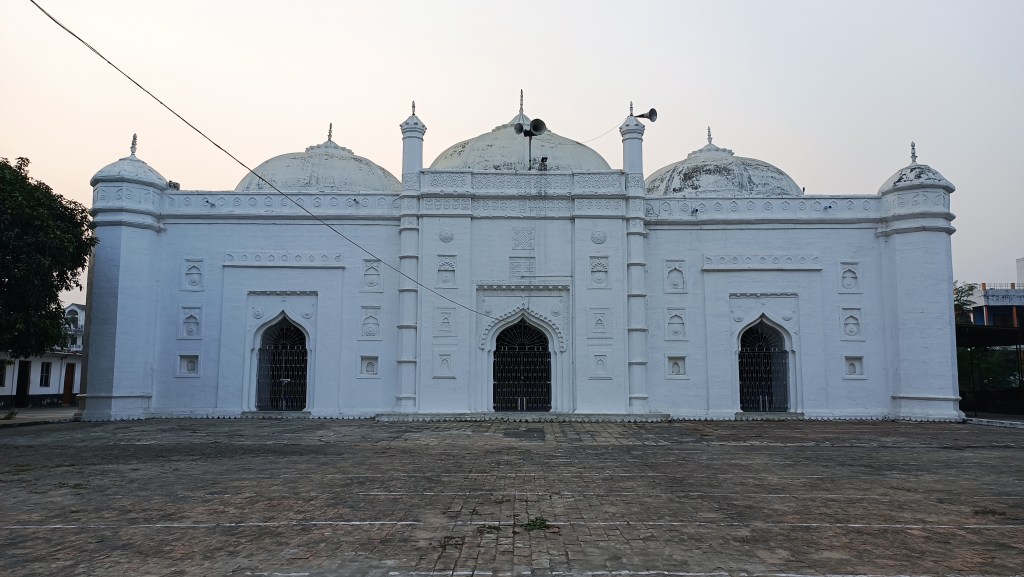
Pathar Masjid, also known as Jama Masjid, is one of the earliest identifiable built heritage of Hajipur. Built in 1587 CE, the mosque was constructed by Makhsus Shah who was governor of Bihar Sharif during the rule of Akbar. There is an inscription on the gateway of the mosque which had revealed information about its antiquity. It was built inside the enclosure of an old fort which was constructed by Haji Illyas between 1345 and 1358 A.D. The fort has ceased to exist now, but Pathar Masjid is still standing, as a witness to all the historical events that have occurred in the town. In the earthquake of 1934, which ravaged the entire region, central dome of the mosque was damaged, but it was repaired in 1945.
Nepali Mandir
The temple is situated near Konhara Ghat and was constructed in 18th Century by an army commander or subedar of the Maharaja of Nepal who was known as Mathbar Singh Thapa. Since it was built by an army commander, the temple is also known as Nepal Chhavni Mandir. The temple is dedicated to Lord Mahadev and the structure is a classic example of Nepalese Pagoda Architectural Style. This temple is also known for its elaborately carved wooden doors and structural members. Around the temple, on each corner, there are four small structures or shrines. These shrines are dedicated to other gods of Hindu mythology.

Old Gandak Bridge
The town of Hajipur was connected to Sonepur with the help of this railway bridge which used Well Foundation Bridge construction system, a method indigenous to India. The foundation stone for the bridge was laid by the Governor of Bengal and was inaugurated by Lord Dufferin in 1885 CE. Well Foundation Bridges were developed in colonial India to overcome the wide nature of rivers in India. Unlike Britain, rivecourse and were wide, constantly shifting course, and had very significant seasonal variation in the flow of water. In 1995, the bridge was found to be unserviceable for heavy traffic because of which the new vehicular and railway bridge was constructed.

G.A. Inter School
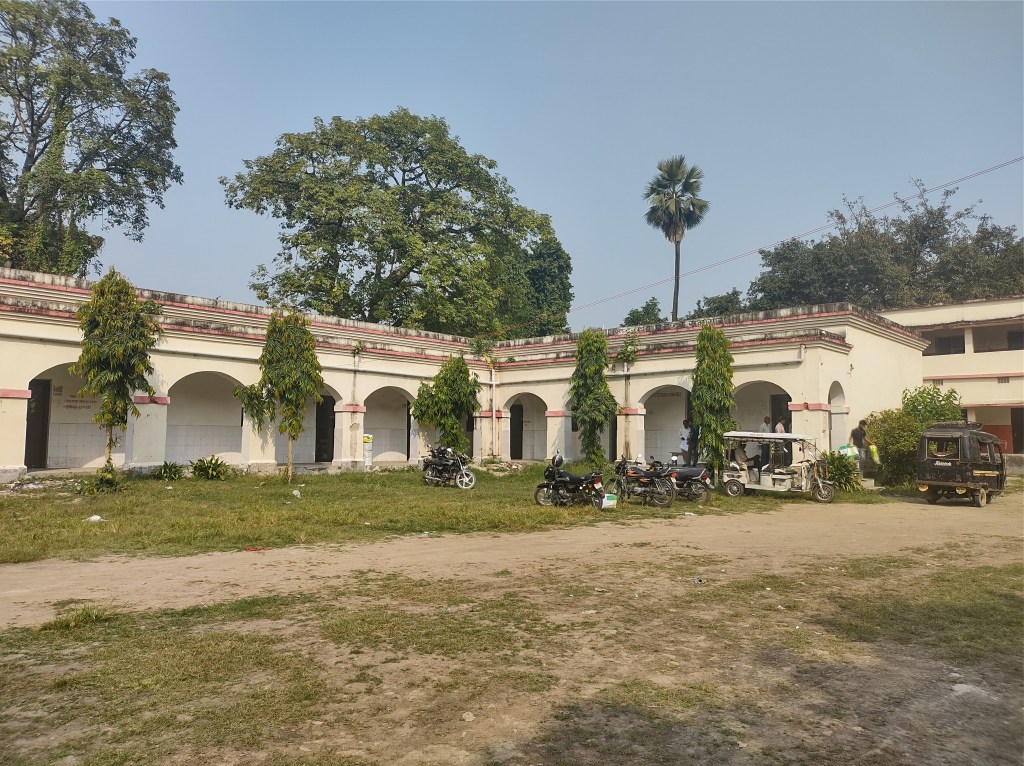
The school was established by British officials in 1891 CE for secondary education of boys. The school complex is located on the banks of Gandak River and to the southern side of Old Gandak Bridge.
Sadar Hospital
The arrival of British in this region ensured construction of administrative infrastructure along with civic amenities such as Sadar Hospital which was formerly known as Civil Hospital. Established in late 19th century, the complex comprised of many buildings constructed in colonial architectural style. However, with the passage of time, only a few of those buildings have survived.
Seedhi Ghat
The ghat was constructed by Chaudhary Lalan Prasad Singh of Muzaffarpur in 1917 CE. It is one of the most important ghats in Hajipur and is located on the bank of Gandak. The ghat has numerous steps, hence the name Seedhi Ghat. Along with the steps, there is a gateway on the ghat with semicircular arches on both sides which are adorned with ornamentation. On the first floor of the gateway, there are projected balconies with decorative pillars.

Hazrat Mamu Bhanja Mazaar
Established by Shaistha Khan, the maternal uncle of Aurangzeb, the tomb is popularly known as Mamu Bhanja ki Kabar. There is no information as to who is buried in the tomb, but it holds sacred significance for the local community.

Ram Narayan Shah Dharamshala
With the establishment of railway line and construction of railway stations at Hajipur and Sonepur, the geographical advantage of this historic town was utilised to boost trade. The region saw increased movement of goods along with people and there was a need of accommodation facilities. In 1917, a dharamshala was established near Hajipur Railway Station and it is known as Ram Narayan Shah Dharamshala. Presently, the structure is used as a commercial space and a storage facility.
Old Residences
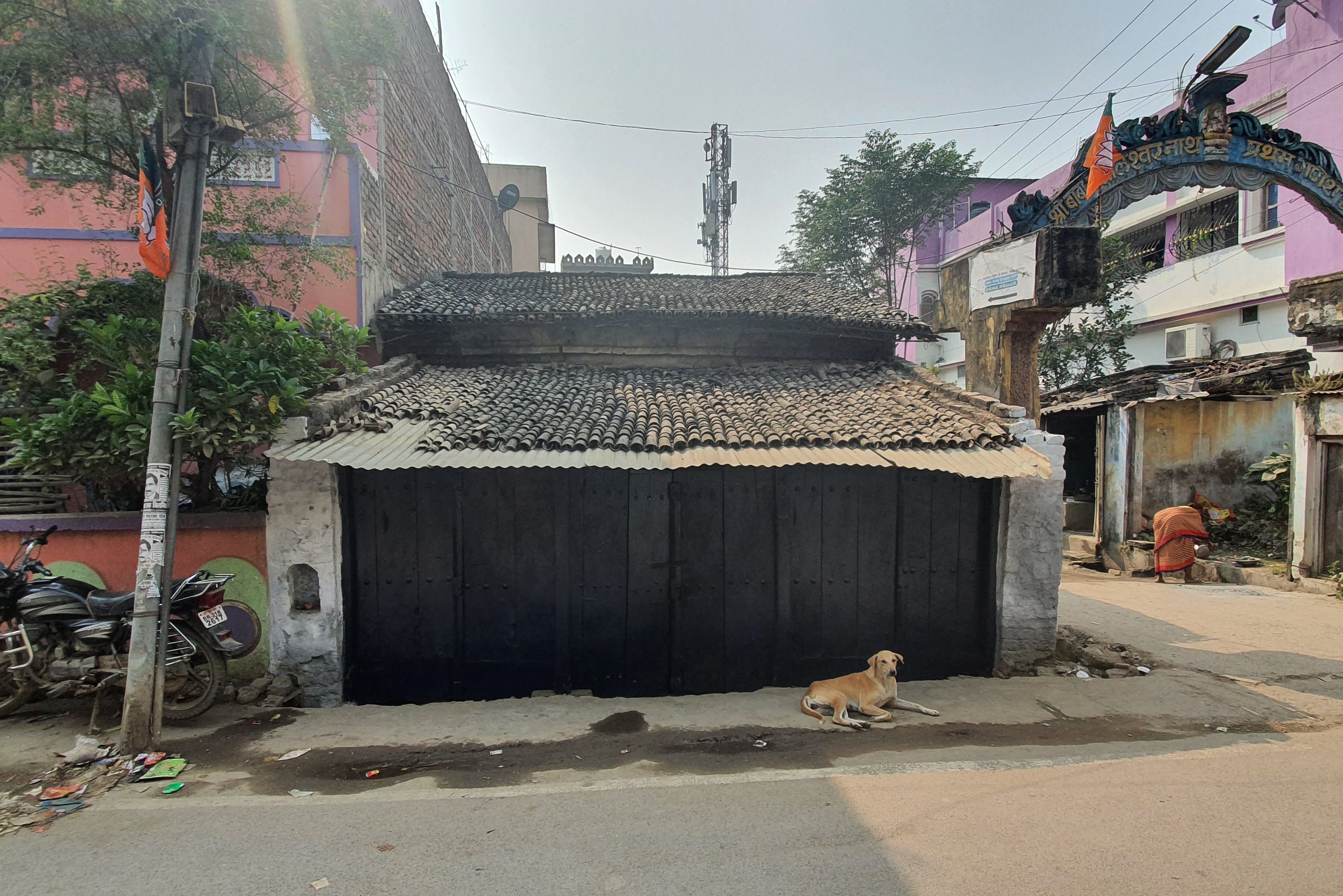
Before the earthquake of 1934, there were many houses in the town which were built in vernacular architectural style. These types of structures had a long verandah, pitched roof covered with terracotta tiles, and composite construction using brick and mud. These types of structures can be seen today as well; however, their numbers have reduced considerably. With the arrival of 20th century, influences of colonial architectural style became prominent in residential structures which was later replaced by elements of Art-Deco style in mid to late 20th century.

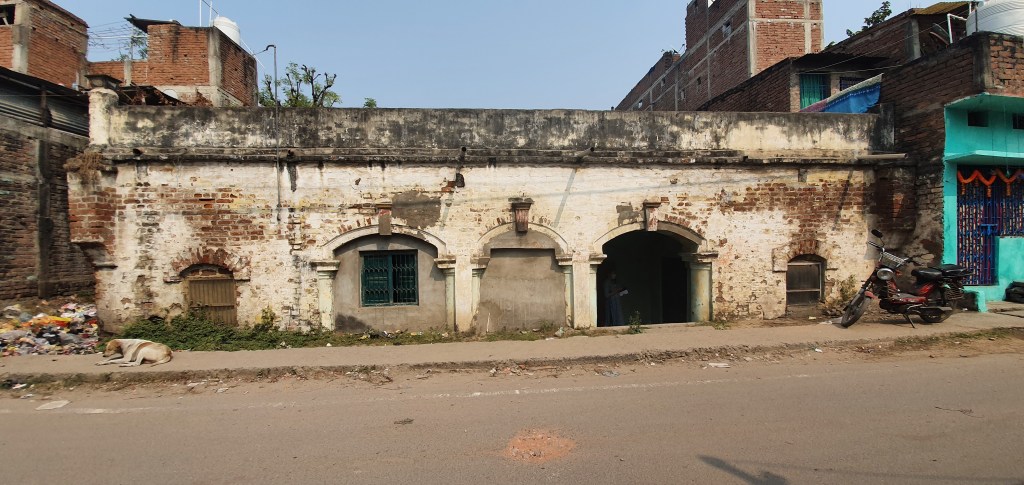
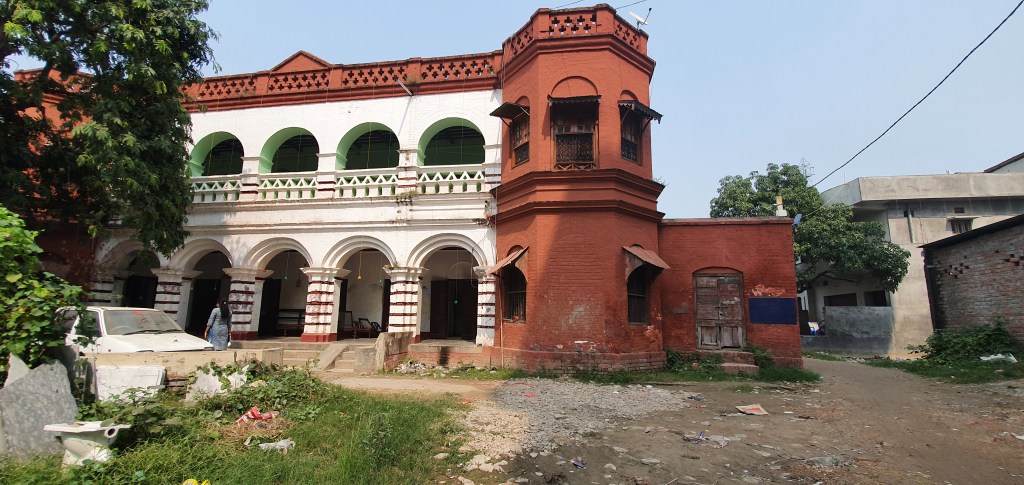
Apart from the sites and buildings mentioned above, there are other places of historic significance, but they have been changed considerably such as Hajipur Railway Station and National Cinema which was established in 1947 CE.
Until a few years back, I was ignorant of the rich heritage that the town of Hajipur has to offer. Through research and exploration, I can now comprehend the evolution of this small town into the city that it has developed into and the whole process have taught me an important lesson. A lesson of not judging a book by its cover and taking the time to understand a place through its history, its built heritage, and the practices/rituals/traditional knowledge system.
[i] http://nalanda-insatiableinoffering.blogspot.com/2021/06/ramchaura-temple-is-it-stupa-to-mark.html.
 Echoes of Time
GREAT JOB! REALISING THE BEAUTY WHICH PASSED THROUGH EYES DAILY WITHOUT GETTING INTO IT.
LikeLiked by 1 person
The splendor of these ancient monuments awed me into silence, as I was ignorant of their historical significance. Now, I feel guilty for not knowing about it. One of them is just a short walk from my kindergarten. 🤦♂️
LikeLike