
Through last few posts, I have tried to share the history and stories of Bhagalpur which is one of the major urban centers of eastern Bihar. It is apparent that presently, physical manifestations of the cultural and historical narrative of the city can only be experienced through its tangible and intangible heritage. While I am no expert in documenting intangible heritage, I have tried to capture the famous art form of Bhagalpur and its intricacies through posts titled Manjusha: An Art Form of Anga and Manjusha: Folklore of Bihula-Bishahari.
So, what is this post about? This post is an attempt to narrate the tales of some of the famous as well as not-so-popular heritage buildings of Bhagalpur. A major part of the information has been gathered from reliable sources such as District Gazetteer of Bhagalpur or books like Bhagalpur Darpan (written by Jharkhandi Jha). However, for some buildings, there were no data available in the secondary resources, and thus, information has been collected from local people and communities. This post is about five architectural gems of Bhagalpur city which have strong historic and cultural linkages and are waiting to be explored.
Tomb of Ibrahim Hussain Khan
Ibrahim Husain Khan or Mirza Ibrahim Beg was the son of Mirza Ghiyas Beg (Itimad-ud-Daulah) and brother of Nur Jahan, empress of the Mughal Empire and wife of Jahangir. He was a veteran in Akbar’s army and was later appointed as the subahdar (governor) of Bengal during Jahangir’s rule. He was bestowed with the title of Fath-i-Jang after he conquered the tract of Khokhara in Bihar (now in West Bengal) and acquired valuable diamond mines. His governorship is said to be marked with various military exploits such as suppression of Magh raids in 1620. His rule ended when Shah Jahan rebelled against Jahangir and fled to Bengal. Shah Jahan charged against Ibrahim Khan who remained royal to the throne and was killed in 1624. He was laid to rest in a tomb situated at the bank of River Ganga in Bhagalpur. The tomb is a fine specimen of the late Mughal architecture. Francis Buchanan, a Scottish physician and geographer, visited the tomb in 1810 and claimed that the tomb was far better than other Muslim monuments of the same period in Northern Bihar. The tomb was repaired in 1845 by the Magistrate of Bhagalpur.
Location – Near Sunderwati Mahila College

Rabindra Bhawan
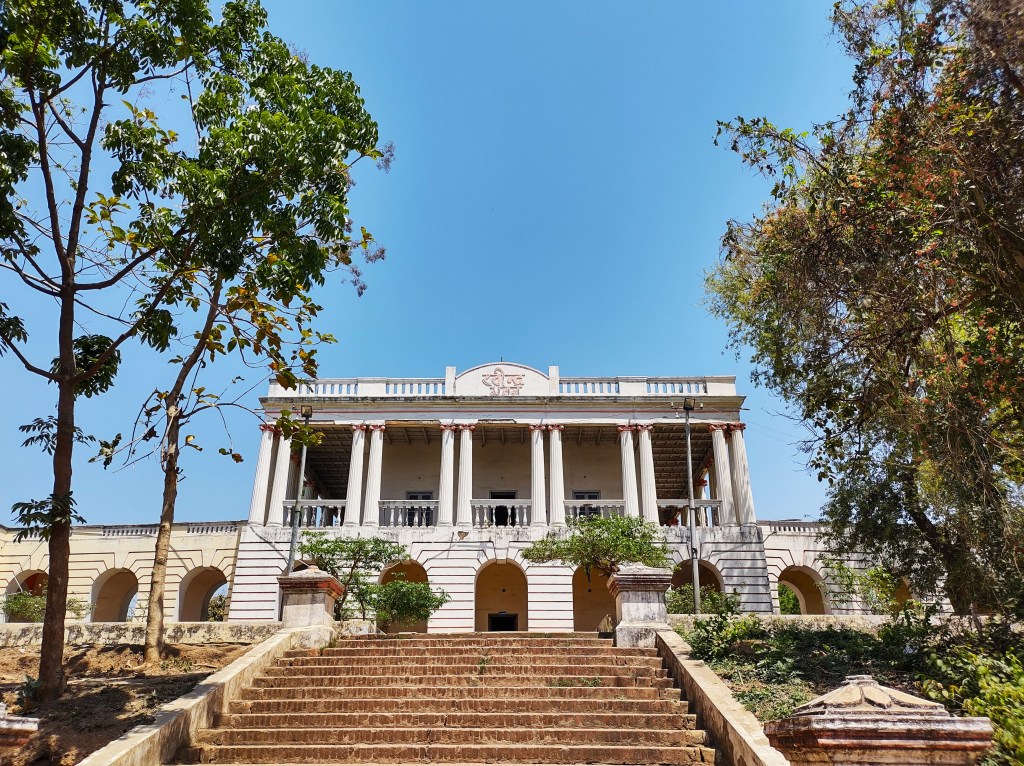
Rabindra Bhawan, formerly known as Tilha Kothi is said to be built by the wealthy zamindars of Bhagalpur. However, in 1773, when Bhagalpur became a district and Augustus Cleveland was appointed as the Collector, he started living in the estate that led to its second name, Cleveland House. Built on an elevated land, along the banks of Ganga, the estate of Cleveland House was believed to be four miles long.
The structure has drawn inspiration from Italian architecture where some of its main features are segmental arches and fluted columns with capitals of Ionic order. The estate was planted with a variety of trees and the house was situated at the head of a lawn which had flowering plants and shrubs. Parts of the boundary wall and gates are still visible in some areas of the city. Cleveland had also hosted Warren Hastings (Governor-General of India) at Tilha Kothi.
In 1910 when Rabindranath Tagore visited Bhagalpur to attend the ‘Third Annual Conference of the Bangiya Sahitya Parishad’, he was inspired by Tilha Kothi, and it is said that a few lines of Gitanjali were composed here. In his honour and to commemorate the event, the structure was renamed as Rabindra Bhawan. The premises have also played an important role in India’s freedom struggle. Today, it has become a part of Tilka Manjhi Bhagalpur University, one of the prestigious universities of the region.
Location – Tilka Manjhi University
Christ Church Cathedral, Bhagalpur
Christ Church Cathedral is one of the oldest churches in the Bhagalpur region. It was built during colonial rule for the officers of British administration and is presently operating under the Diocese of Patna, Church of North India. Architecturally, the church has been built in Neo-Gothic style, and it is one of the surviving examples of such structures in the region. The structure is rectangular in plan with a portico on its western side, which serves as its entrance. Buttresses supporting the tall spires can be seen on the northern and southern facade. Key features of the building include large stained-glass windows at the altar, a pitched roof with timber/cast-iron rafters and tiled purlins, tall octagonal spires, and a bell tower on the terrace.
Location – Near Ghanta Ghar (Clock Tower), Bhagat Singh Chowk

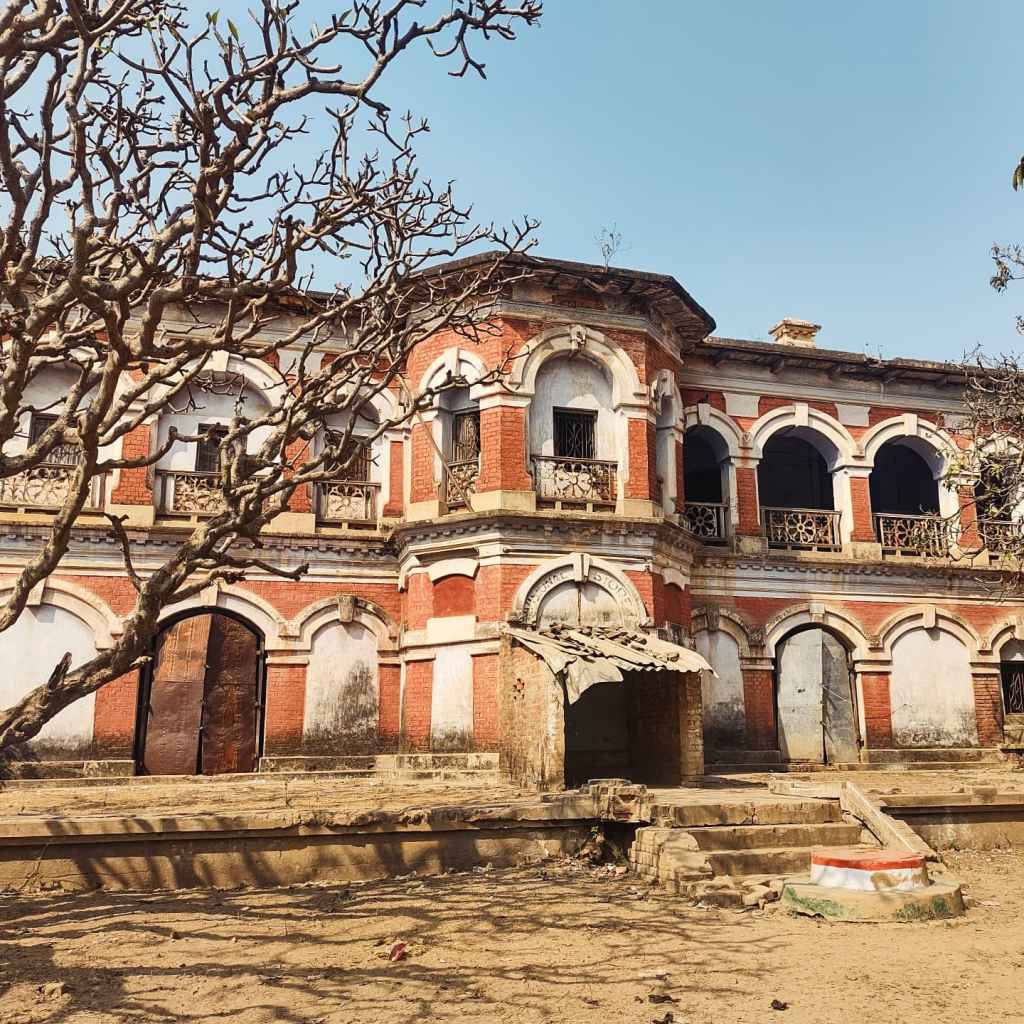
Divisional Store
The structure was used as the Divisional Store of Bhagalpur district under colonial rule, and it was part of a large estate. Situated in the premises of Tilkamanjhi Bus Stand, the structure is an excellent example of colonial architecture with an interesting mix of indigenous architectural elements. It is a two-storey building with a series of segmental arches on the facade. Key features of the building include an ornate architrave, embellished cast iron spiral staircase, and railings made with timber and cast-iron members.
Location – Tilkamanjhi Bus Stand, Bhagalpur
Cleveland Memorial
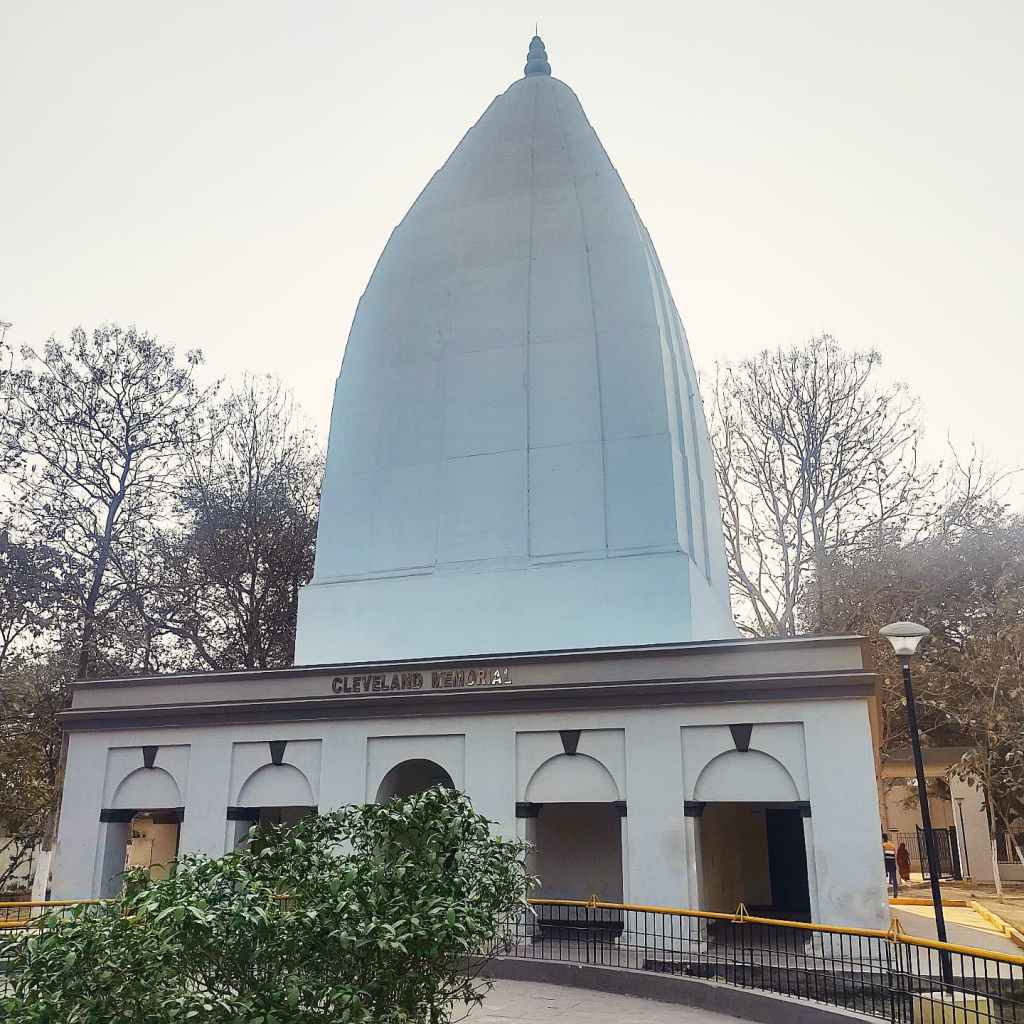
Augustus Cleveland was a British administrator of East India Company who became the first District Collector of Bhagalpur and remained in office till 30th November 1783. With the accession of the Collector’s office, Cleveland started making strategies to subjugate the tribal chiefs of southern Bihar (presently includes the area of Jharkhand as well). These hilly ranges were controlled by tribal communities, and they were protecting their land from acquisition by the East India Company. The protest was not accepted by Cleveland, and he launched operations to subdue the community. During one such conquest he was executed by the notable tribal leader Tilka Manjhi. Cleveland died at an early age of 29 and two memorials were erected in his honor by the Court of Directors of East India Company, one is located in front of his house, Tilha Kothi and other in Sandys Compound.
This memorial has been constructed in the form of a temple where the front facade of the building is adorned by segmental arches. The structure has a central shrine that commemorates Augustus Cleveland, and the ceiling of the shrine is raised to form a grand shikhara.
Location – Sandys Compound, Bhagalpur
Above mentioned sites/structures are not even a handful of the architectural marvels which are hidden in the city. Hence, this post is a first of many such segments to come, so stay tuned and till then, happy reading!
 Echoes of Time