
It has been a long time since the post on ‘Ancient History of Bhagalpur’ was published and succumbing to my procrastinating qualities I had no plans in sight to continue the story of this remarkable city. Eventually I had to come out of this reverie because a narrative as powerful as of this city’s needs to be heard Before that, a quick little recap – the previous post talked about the foundation of the city of Champa (eastern part of Bhagalpur city) and how it evolved from the time of Atharvaveda to Mahabharat. It also focused on how the city became a pilgrimage destination for the followers of Jainism and changes it witnessed as a part of Magadh Empire.
With this recap, it would be worthwhile to say that the city was prosperous and withstood a significant position in ancient Indian history. This fact can also be corroborated by the huge repository of city’s tangible and intangible heritage and one such antiquity is situated in Champanagar. Presently situated near Constable Training School (CTS), Nathnagar, the site is famous as Karnagarh meaning ‘fort of Karna’. Karna, the celebrated warrior of Mahabharata, was the king of Anga and hence it is believed that the remains unearthed at aforementioned site are the ruins of his fort. In the colonial records it is mentioned that the site was more like a plateau and the ruins had resemblance with a similar site in Purnea which was believed to be palace of Kichak (contemporary to Karna). The site had a square rampart without works but it was surrounded by a ditch. Over the years, a series of excavations have been done in the area which have revealed a section of wall, utensils and toys made from clay, sculptures, and shards of jewellery. However, these excavations have not been helpful in clearing the air of mystery that surrounds Karnagarh as the full potential of this site have not been uncovered yet. Lack of funds have limited the exploration, but archaeological experts say that the site has retained its authenticity due to its location inside Constable Training School which has restricted any kind of development on the site.
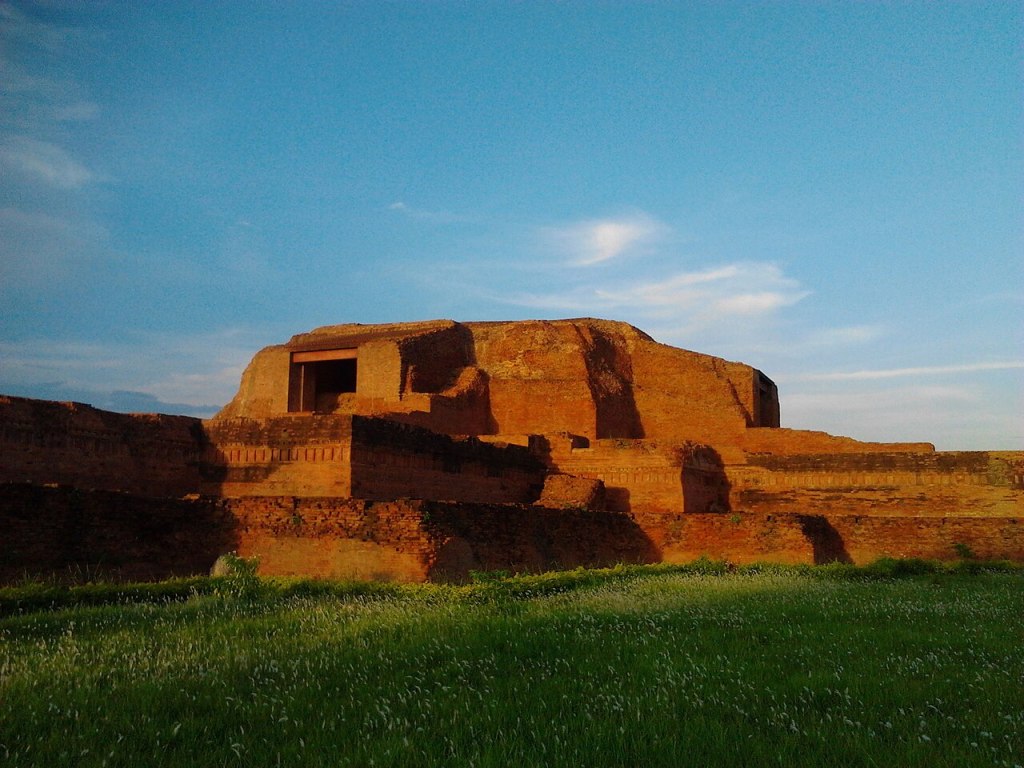
Now that we have a sense of the ancient historical narrative of Bhagalpur, its time that we understand what happened to the city during the medieval period. Fast forward to the third decade of eighth century when the Kingdom of Magadh and South Bihar was conquered by the Pala dynasty of Bengal. Dharampala (770 – 810 C.E.), son of Gopala was a Buddhist and a great advocate of education which led to the foundation of Vikramshila Mahavihara (one of the largest Buddhist viharas with more than one thousand students) near Champa and it further strengthened the significance of this ancient city. The vihara flourished under the Sena kings of Bengal as well who took control of the region in 11th century, but the prosperity of this establishment ended in the 13th century. Muhammad Bakhtiyar Khilji, a Turco-Afghan military general of the Ghurid Empire, razed Vikramshila to the ground while on his mission to invade Bihar and Bengal. His conquest marked the beginning of Muslim rule in the region as towards the end of 14th century Bihar became a part of Jaunpur kingdom. However, about a century later it was conquered by Hussain Shah of Bengal and then by the rulers of Delhi which included Lodis and Mughals in succession. During these reigns, Bhagalpur was a part of Sarkar Munger, one of the seven sarkars[1] into which Bihar was divided.
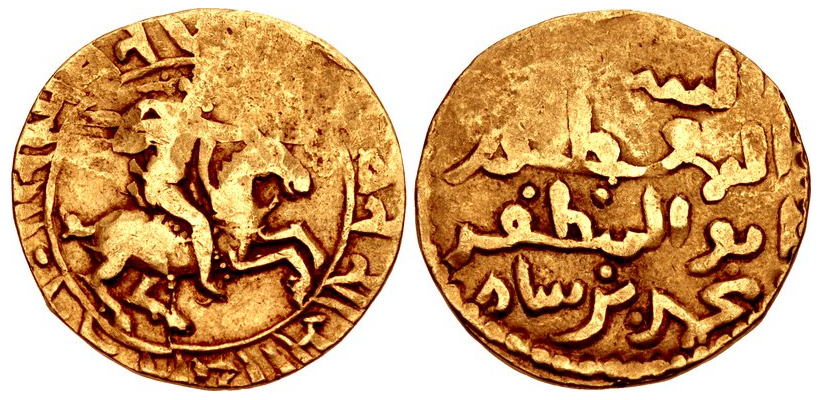
Under Akbar’s reign, the city of Bhagalpur is occasionally mentioned in official records; one of the detailed accounts mentions the marching of Mughal army through the region while on their way to invade Bengal in 1573 and 1575 C.E. Ain-i-Akbari mentions that Bhagalpur was the chief town of mahal or pargana[2] of the same name and was later made the seat of an imperial faujdar, or military governor. Later in 18th century with the decline of Mughal Empire, the region came under the control of colonial rulers, thus began a journey which lasted for two centuries.
Like the period of ancient history, medieval era also left its mark on the city in terms of built and intangible heritage. These remnants of the past can still be experienced today, only if you know where to look. So, the next post will highlight the masterpieces of Bhagalpur’s medieval history, a simple guide to explore the city; till then, happy reading!
[1] A historical administrative division, equivalent to a district, that was part of a larger province or ‘Subah’. Sarkars were further divided into ‘mahal’ or ‘pargana’.
Sources:
- District Gazetteer of Bhagalpur (1962)
- https://www.jagran.com/bihar/bhagalpur-bhagalpru-news-21569743.html
 Echoes of Time