
Like most of us, I have always associated the state of Bihar with fertile plains, agricultural fields, and a land abundant with rivers. While it is true for most of the province, this perspective does not capture land-forms like the beautiful hills of Rajgir or the deep gorges lined with waterfalls in Kaimur Hills of Rohtas. This post is about one such region, a land located at the border of India and Nepal and a place so serene that it just seems unreal. One might ask what is so special about this place apart from being at an international border; well, the town is synonymous to a tiger reserve as it is surrounded by dense forest and is blessed by rivers like Gandak and Panchnad. It also commands an enchanting view of the mountains of Nepal which is only seen from a few spots in India.
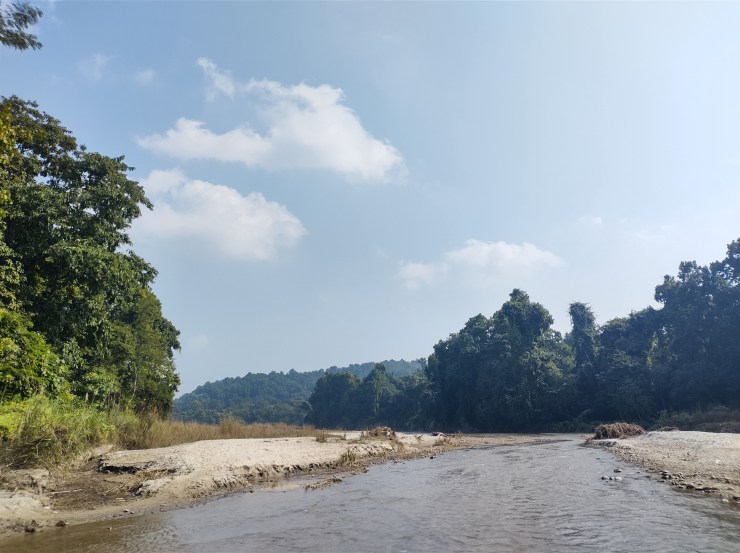
Located in West Champaran district, Valmiki Nagar was originally known as Bhainsalotan which means ‘buffaloes wallow’. This name was bestowed to the town as it used to be the haunt of wild buffaloes of the Terai (an area of marshy jungle near the Himalayan foothills which is spread in parts of India, Nepal, and Bhutan). Valmiki Tiger Reserve is connected with forests of Nepal, namely Chitwan National Park, making it an important biodiversity hotspot of the region.
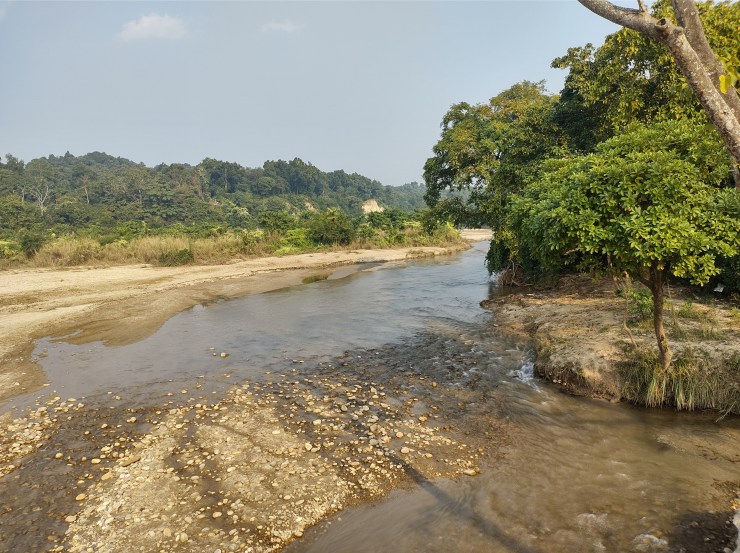
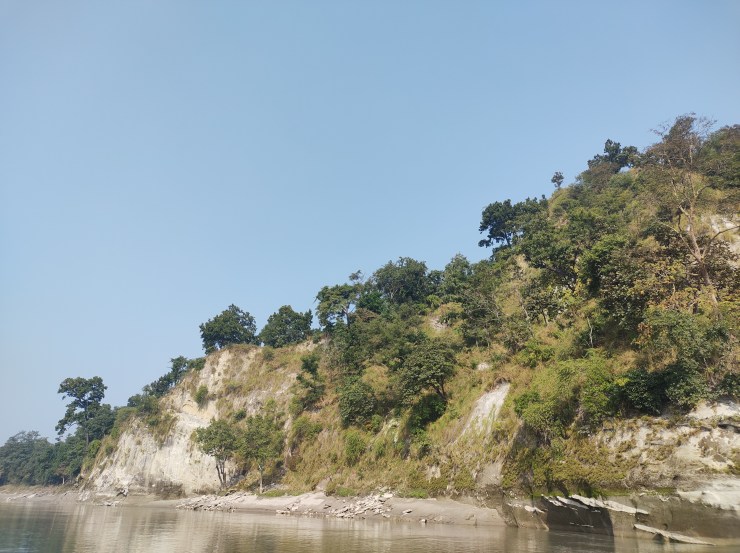
A spot in forests close to Valmiki Nagar is renowned as the site where the ashram of Rishi Valmiki was situated. Valmiki, the author of Ramayana, is said to have given shelter to Sita in his ashram when she was exiled by Raja Ram. Although the said site is on the other side of the border, located a few meters away, locals and tourists have easy access to this place. The town is also close to Triveni Dham (in Nepal)– the place where Rivers Panchnad and Sonaha merge into Gandak[1]. It is at Triveni Dham that the most important folklore associated with the river starts i.e., the fight of Gaj and Garah, the elephant and the crocodile[2]. While the fight started at Triveni, due to the flow of Gandak, it ended at Harihar-kshetra, presently near Hajipur and Sonepur.
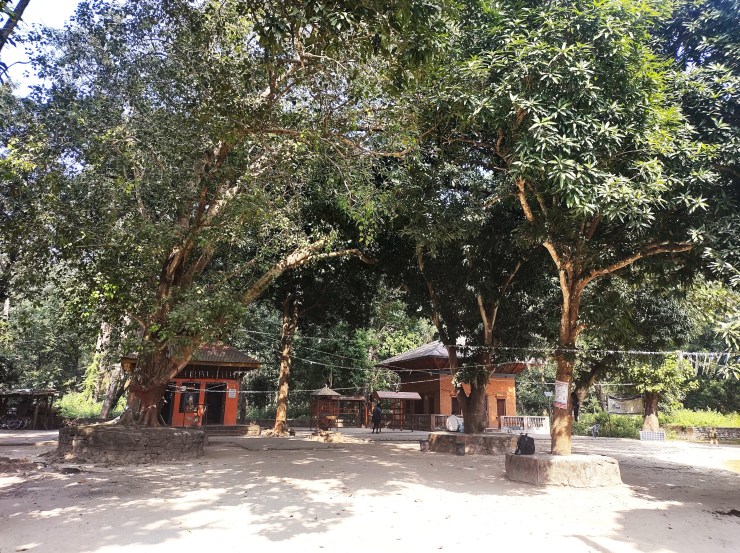
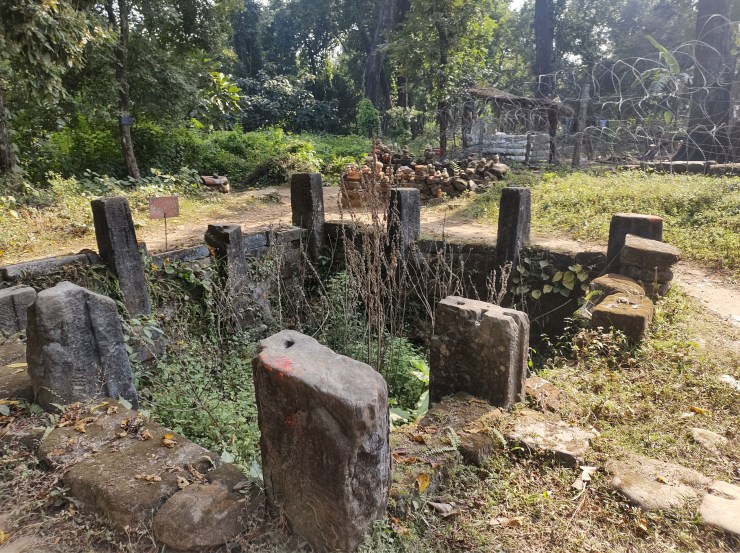
Owing to the sacred nature of this place, various cultural heritage sites are located here, including Jata Shankar Mandir, Kaleshwar Mandir, and Nar Devi Mandir. Kaleshwar Mandir, commissioned by rulers of Bettiah Raj, sits at sangam of River Gandak and Panchnad.


Valmiki Nagar of today was shaped in the mid 1900s, when the Gandak Project was approved between Nepal and India. With the construction of barrage and canals, the place also witnessed erection of staff quarters and other civic infrastructure[3]. Remnants of these structures can still be seen in the town. As for the forests, they were owned by zamindari estates of Bettiah Raj and Ramnagar Raj before independence. Later forests of Ramnagar Raj were overtaken by the state government in 1950 and from Bettiah Raj in 1953-1954 under the Bihar Private Protected Forests Act (1947). They were also given the status of ‘protected forest’. In 1990, a part of this area was declared as ‘Valmiki Wildlife Sanctuary’ due to its significant wildlife habitat while other areas were notified as ‘Valmiki National Park’. However, in 1994, the whole area was taken from State Forest Development Corporation and Valmiki Tiger Reserve was constituted as the 18th reserve under Project Tiger of Government of India[4].

Apart from the places listed above, Valmiki Nagar offers different ways in which one can explore the nature; most preferred way is through jungle safari which is maintained and executed by the state government. However, in case of safari, most of us are only eager to spot wildlife like tiger or leopard and not enjoy the serenity around. Its agreeable that spotting wildlife is a thrilling part of the safari, but it’s nothing when compared to the calming sound of the jungle or soaking in the widespread green which we come across so rarely in our daily lives.
I am a little embarrassed to admit that I was completely ignorant of the existence of this place until 2018, when a friend introduced me to Valmiki Nagar and the tiger reserve. A wildlife conservationist by profession, he has been pivotal in providing insights related to this place, whether it is the historical narrative, connection with various rivers, or a general knowledge on the diverse fauna.
While I may not have spent a lot of time here, but please don’t visit this place with your own expectations as they might get shattered, for this place is still a quaint little town stuck in 90s but it has its own charm which is surprising in the most unexpected way.
- Rivers Panchnad and Sonaha originate in the Sumeshwar Hills of Nepal and are considered sacred as well due to their association with Gandak.
- The folklore has been mentioned in detail in the blogpost titled ‘Hajipur: A Forgotten Legacy’.
- Chaudhary, P. C. (1962). District Gazetteer of Champaran. Patna.
- https://valmikitigerreserve.com/?page_id=2058
 Echoes of Time