
In 2006, The Guardian published an article on Bihar, where in addition to other challenges faced by the state the author also talks about the status of power supply. The quote says “So low, in fact, is the state’s consumption of electricity that satellite images of Bihar, taken at night show it as the heart of India’s darkness”. It is not hard to notice the subtle hint of contempt which was directed at the degrading socio-economic condition of the residents and lack of development in the state. Born and brought up in a small town of the state, I have been a witness of those conditions but my privileges have not let me experience that suffering first-hand. Nevertheless, I am no stranger to the stereotyping and derogatory comments that one has to face in this country just because they have their roots in Bihar. While most of the time I have brushed aside those snide remarks, it will be wrong to say that these snippet of horrible conversations have not made me doubt my roots. But that outlook changed after I entered the field of heritage conservation which values cultural diversity and uses tools of conservation to uplift and strengthen the local communities.
After becoming a practicing conservation architect, I’ve always had this nagging feeling that I was yet to understand the intricacies of historical narratives of Bihar. Though I had visited some of the sites of cultural importance in my childhood, the memories of those visits have started to fade away and there was a need to resume the exploration. My journey started with the ancient seat of power in Bihar and a place that has been my second home. Patna or Pataliputra was always a favoured administrative and commercial center owing to its location along the bank of River Ganga. The city is filled with historic sites ranging from the era of mahajanpadas to the British Raj. This post is about a structure that was born out of the love for history and antiquities by the colonisers, this is the story of Patna Museum.
To understand the history of this museum, let’s go back a few centuries. In 1764, a battle was fought in Buxar (presently located 130 kms from Patna) between East India Company and the joint armies of Mir Qasim (Nawab of Bengal), Shuja-ud-Daula (Nawab of Awadh) and the Mughal Emperor Shah Alam II. The battle was fought to gain control over eastern India and it ended when Shah Alam II signed the Treaty of Allahabad. The treaty marks the beginning of British Rule in India and formation of Bengal Presidency which also constituted the provinces of Bihar and Odisha. With the establishment of colonial rule, the search for history of ancient India also started which resulted in exploration and archaeological excavations. Since Bihar and Odisha were included in the Presidency of Bengal, all the antiquities unearthed from the excavations were generally transferred to the museums in Bengal. But on 22nd March 1912, provinces of Bihar and Odisha were carved out from the Bengal Presidency through The Bengal, Bihar and Orissa and Assam Laws Act, 1912. The new province of Bihar included the present states of Bihar, Jharkhand, and Odisha and Patna was made its capital.
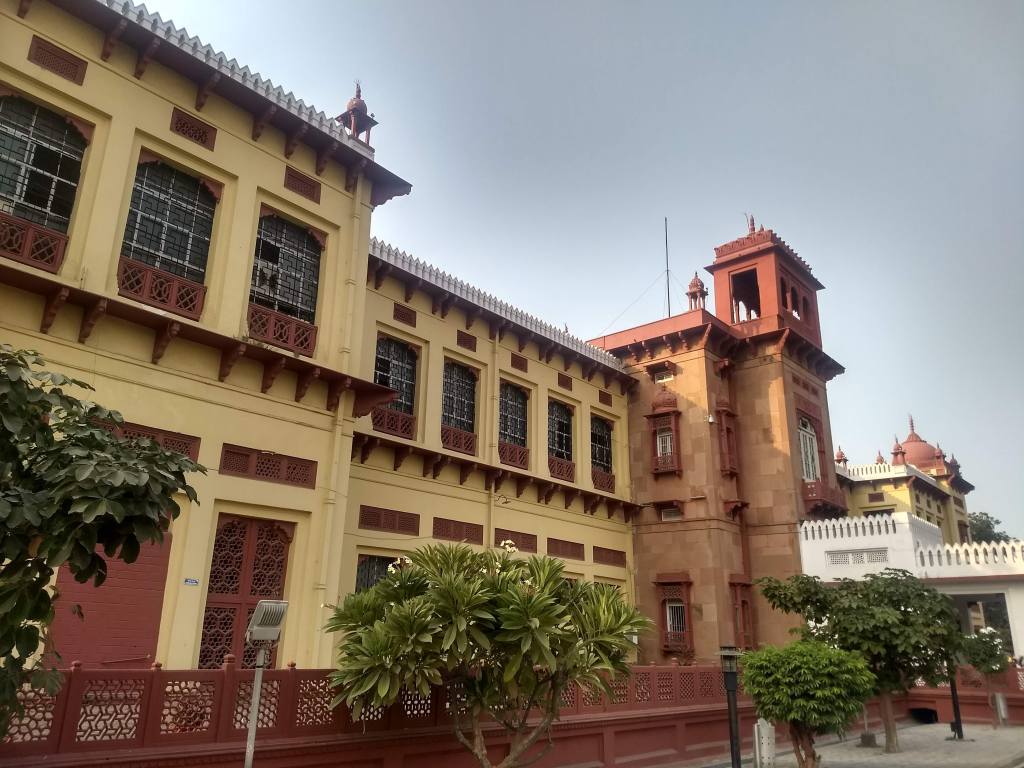
After the new found status of Patna, it was essential for the authorities to build infrastructure that were suited to the needs of colonial administration. A new capital was proposed and the site was chosen to the western side of ancient capital (to the west of old Patna – Gaya Road or Buddha Marg). Layout of the new capital was done by an architect named J.F. Munnings. Structures like the Secretariat, Council Chambers, and High Court were being planned and constructed in the new capital. At this time the need for a new provincial museum was felt by the colonial administration, and thus Patna Museum was born. In 1915 the museum started functioning from the commissioner’s bungalow which is currently situated in the campus of A.N. Sinha Institute. Meanwhile, a new structure for the museum was being designed by Rai Bahadur Vishnuswaroop which was inaugurated on 3rd April, 1917 by Sir Edward Gait, the Lieutant-Governor of Bihar. The museum was opened to the public in 1929 by Sir Stephenson, the then governor of Bihar and Odisha.
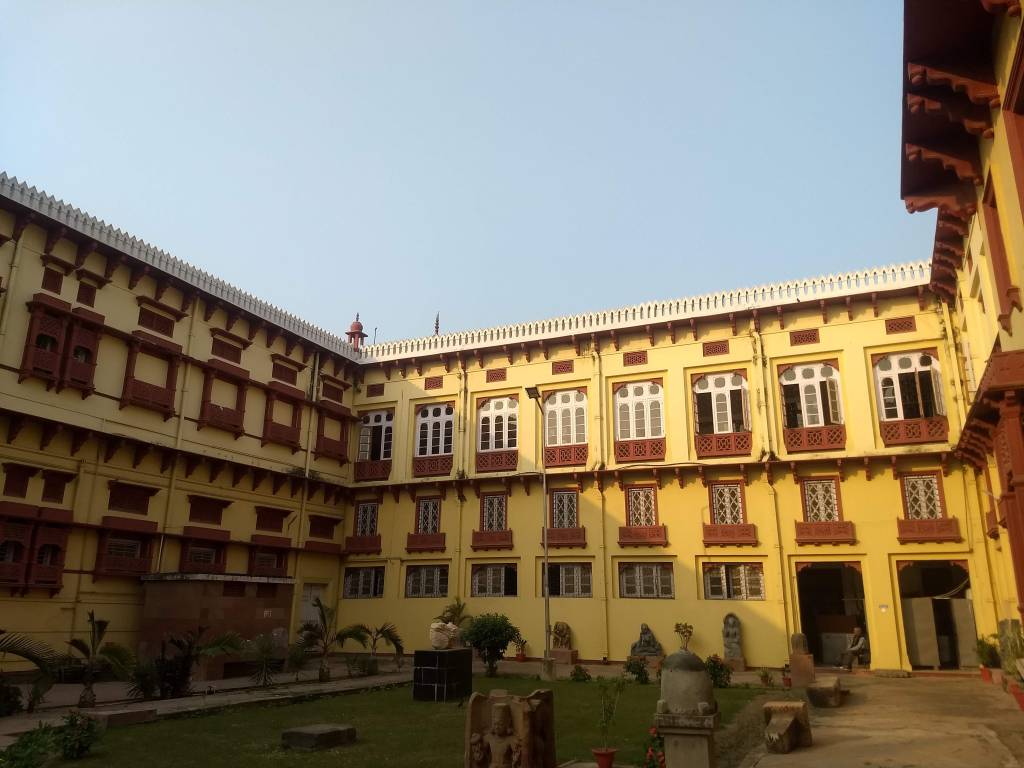

Patna Museum is locally known as Jadu Ghar and it was the second site that I decided to explore in the city. First look of the structure completely baffled me for I had never seen that particular architectural style in Patna. The structure is designed in Indo-Saracenic style with a combination of Mughal and Rajput architectural styles. Some of the remarkable features of this structure are a central entrance portico, chhatri over the central lobby, domes over the four corners, windows constructed in the style of jharokhas, use of sandstone jalis in ventilators and railings, a grand staircase, and parapet in the form of battlements. It also has an elaborate courtyard which is adorned with several sculptures. The structure is surrounded by a large green space that serves as a relaxing space for the visitors and also as a gallery for several artefacts.
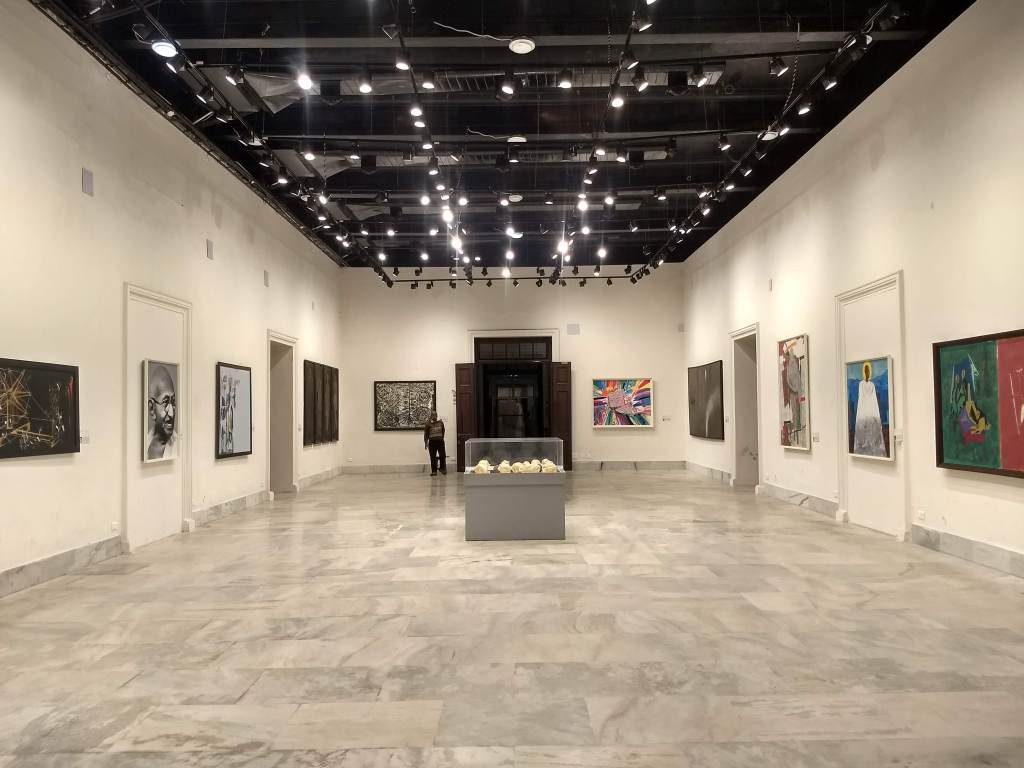
The museum became a nodal point for all the antiquities and artefacts obtained in the province of Bihar and Orissa. Some of the notable collections of the museum were Relic Casket of Buddha (said to contain the sacred ashes of Gautam Buddha) obtained from excavation at Vaishali, statue of Didarganj Yakshi, and the longest fossil tree which is 200 million years old and 53 feet long. Rahul Sankrityayan, the famous writer and independence activist donated 10000 manuscript to the museum which were brought by him after his travel to Tibet and Ladakh. These manuscripts are written on handmade papers and in gold and silver. Originally a part of Nalanda and Vikramshila University library, these manuscripts were taken to Tibet by the scholars before the destruction of the universities. Other highlights of the museum are National History Gallery, Rajendra Prasad Galley, and the paintings of Mahatma Gandhi Gallery.

However, over the years the number of those artefacts increased significantly and the museum was running out of space. It housed over 75000 antiquities including more than 4000 terracotta and stone sculptures, and 28000 coins. Due to the pressure on the museum, state government planned for the construction of a new museum and Bihar Museum was inaugurated in 2015. Antiquities till 1764 A.D. were transferred to Bihar Museum while antiquities post-1765 A.D. remained at display in Patna Museum.

While most of the sites of cultural importance are being neglected in the state, proposal for redevelopment plan of Patna Museum is a welcome change. The plan was proposed last year and the idea is to develop a garden around the museum which will tell the story of evolution of civilization on the banks of Ganga and rise of Patliputra.
At a time when one of the most iconic museums of India is being razed to the ground, it becomes essential for us to rethink the decisions that put evidences of our past in jeopardy. Museums are the mirrors of our past, some of us might find them boring but it goes without saying that in their absence our life is incomplete.
Sources:
- Bunting, Tony. 2017. Britannica. March 30. Accessed July 30, 2021. https://www.britannica.com/event/Battle-of-Buxar.
- Kumar, N. 1970. Bihar District Gazetteers: Patna. Patna: State Editor, Bihar District Gazetteers.
- 2018. March 22, 1912: Bihar is Born. March 22.
- 2019. Museums of India. Accessed July 29, 2021. https://www.museumsofindia.org/museum/563/patna-museum.
- Patna Municipal Corporation. Accessed July 30, 2021. https://www.pmc.bihar.gov.in/patna-museum.aspx.
- Sopam, Reena. 2020. “New look Patna Museum to tell story of Patliputra’s rise on Ganga’s shores.” Hindustan Times, September 24.
Featured Image Credit – http://www.famousplacesinindia.in/Museums/Patna-Museum.aspx
 Echoes of Time