
February of 2018 brought with itself an opportunity to visit a place that I had always dreamt of exploring; a land known as the ‘Paradise on Earth’. It was quite an eventful journey to Srinagar; our flight got delayed for two hours due to heavy snowfall. When we finally took off from New Delhi, the flight could not land in Srinagar due to zero visibility and we came back after taking a round trip. Our sheer bad luck was evident for the next three days as it was proving almost impossible to book a flight and I could feel my excitement dwindling. Nevertheless, the sun shone on us again and a week later we were finally in the valley of Kashmir.
Over the course of history, there have been many individuals who have tried to capture the beauty of Kashmir Valley through various mediums – poems, proses, and paintings being some of them. Before starting this article, I was under the assumption that maybe I could do the same but soon the realization dawned. My novice writing skills were no match for the poems and proses that have been composed in the honor of Kashmir and my words could never do justice to its breath taking landscape.
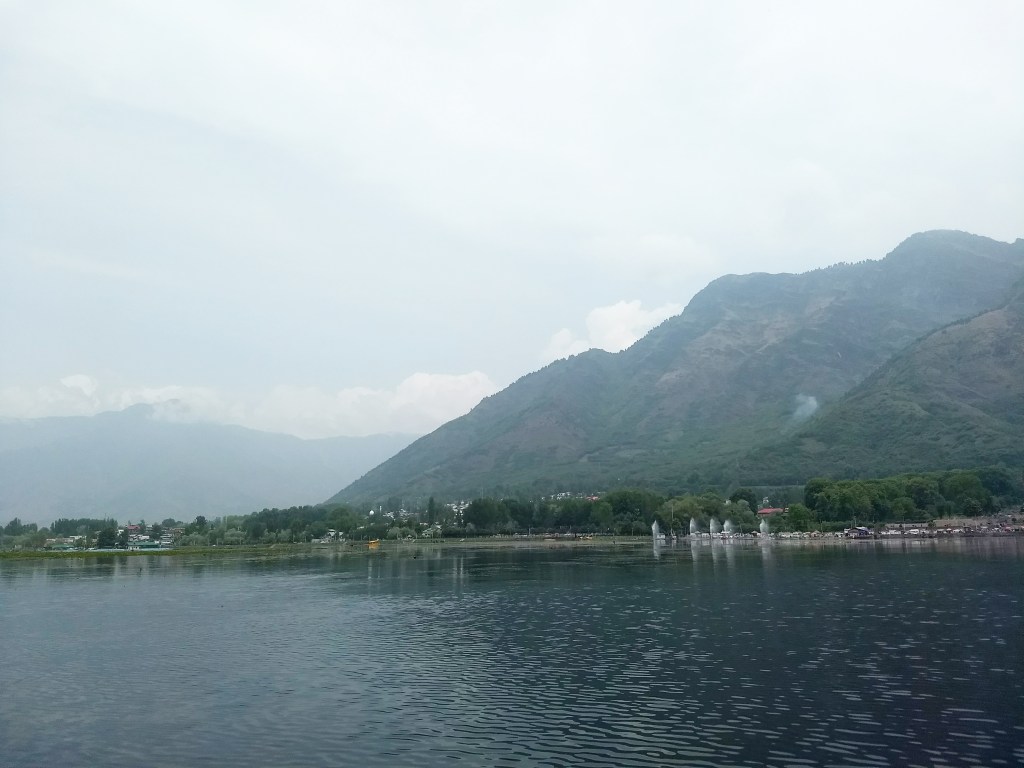
After landing in Srinagar, it took me a couple of days to understand the lay of the land. Most of the days were spent at eastern fringes of the city which is located along the Dal Lake. By the tenth day, that area had become extremely familiar as we were now aware of all the nooks and corners, locals had started recognizing us and were extremely helpful in ensuring that we get accurate information in our surveys. Eastern part of the city is situated at the foothills of Zabarwan Range with the beautiful backdrop of the hills and Dal Lake in front. It is in this alluring setting that one gets to experience the Mughal Gardens of Srinagar which includes Shalimar Bagh, Nishat Bagh, Pari Mahal, and Chasma Shahi.

In the pre-Islamic period, gardens of the valley were based on the concept of vatikas of ancient India and were created mostly in the form of orchards. With the founding of Shah Mir dynasty, Islam was firmly established in the region. Sultan Zain-ul-Abideen is said to have built many gardens in his capital Naushehar and the island garden of Zani Lank in the Wular Lake. It is believed that the founder of the dynasty Shah Mir had Persian origins and hence these gardens followed the pattern of Persian Paradise Gardens. With the annexation of Mughals, Kashmir saw construction of more gardens particularly during the reign of Jahangir and Shah Jahan. Besides the four gardens in Srinagar, the other two gardens are located at Achabal and Verinag. Today, all the six gardens are on the tentative list of UNESCO World Heritage Site.
Mughal Gardens generally have walled enclosures and rectangular layouts. Water is the central and connecting element of these gardens while other features include cascading water channels, axial paths, an assortment of shade and fruit providing trees, and flowering plants. Since water is the central element of these gardens, sites for building those gardens in Srinagar were chosen near the foothills of Zabarwan Range. Here, water for the gardens were sourced either from streams or springs while the mountainous terrain resulted in the terraced layout.

Extensive research materials were available to us on the gardens of Kashmir but I was relatively clueless about Pari Mahal. So, while we were waiting in the long queue of the cars on the narrow approach road to the complex, I was not expecting anything out of the ordinary. It was only after going through the entrance that I truly appreciated how extraordinarily astounding the place was.
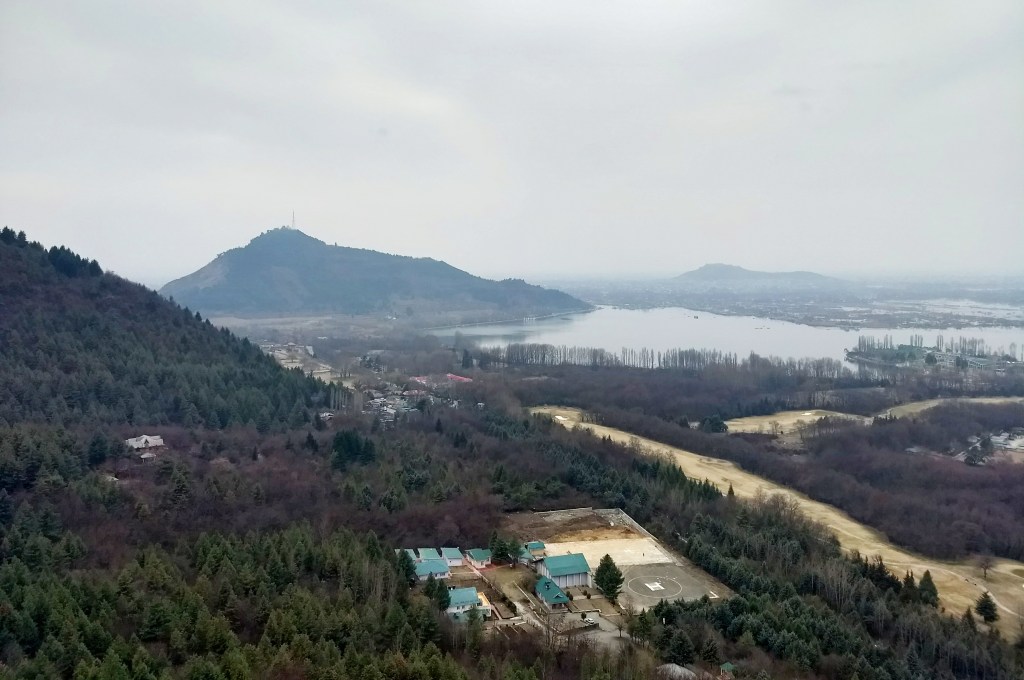
Pari Mahal or ‘the abode of fairies’ was built around 1650 by Prince Dara Shikoh, the eldest son of Shah Jahan. It was named after the wife of Dara Shikoh – Nadira Begum, who was also known as Pari Begum. The complex was built for Prince’s tutor, Mullah Shah Badakhshi but later it served as a residence, a library, and a facility for carrying out astronomical observations and teachings. Unlike the other Mughal gardens, Pari Mahal does not have a cascading central water channel. The garden is 122m by 62.5m and is laid out on six terraces which are supported by arched retaining walls. Entrance to the complex is via the fourth terrace and upon entering, one is mesmerized by the amazing view that this place has to offer. The terraced garden of Pari Mahal offers an exquisite view of Hari Parbat Fort, Dal Lake, and the surrounding areas. It takes a strong will to tear yourself apart from the magical scenery and start exploring the complex.

All the six terraces of Pari Mahal are different from one other. The uppermost terrace has a water reservoir built along the mountain side with arched retaining wall. The whole complex was fed by a spring through the means of a tank and underground earthen pipes. The tank is located in the middle of the second terrace and the façade of the retaining wall has 21 arches with two staircases on each end.

Third terrace has a central domed chamber with its entrance on the eastern wall. On both sides of the entrance there are a serious of rooms, where the room on northern side is believed to be the hamam. Fragments of pipes can be seen projecting from the domed ceiling of the room which corroborates the theory. The fourth terrace has no structures on it and hence it gives an unimpeded view of the city.
Fifth terrace has a double storeyed retaining wall with arcade running on both the floors. The central portion is extruded to the northern side and has an interesting construction detail. Arches of first floor in the central area has been fitted with thin stone slab of slatey texture to create small openings which gives an appearance of a jali.
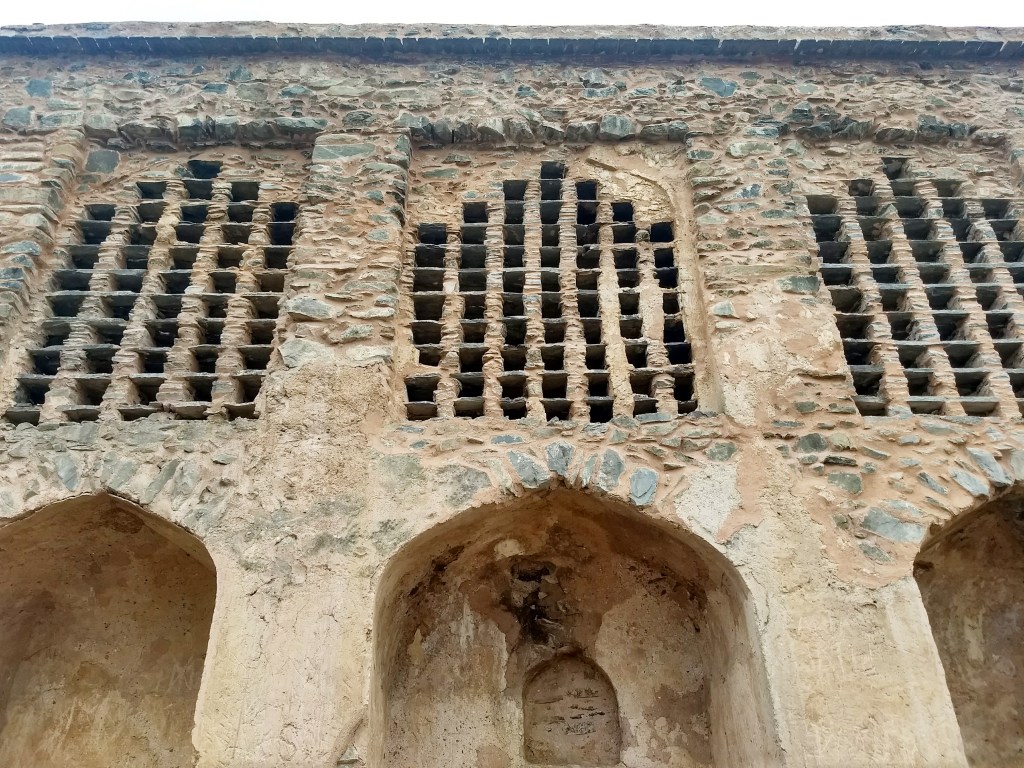
Upper floor of the retaining wall has been built as an arched corridor which runs on both sides of the central structure while octagonal bastions are located on each end. The last terrace has an arched retaining wall with bastions at each end and a rectangular tank is located in the middle.

Dara Shikoh was a great patron of art and architecture among many other disciplines. Executed by Aurangzeb in the prime of his life, Dara’s interests were never woven into reality and that makes Pari Mahal as one his last surviving legacies. Unlike the other gardens of Kashmir, few attempts have been made to restore this complex to its past glory despite its unique value.
Aside from the receding winters, this legacy of Dara Shikoh welcomed us again with open arms in the spring of 2018 and I have wonderful memories of experiencing two seasons at this magnificent place. While it is true that the complex was named after the Prince’s wife, the beauty that this place holds makes it hard to believe that it is anything but the abode of fairies.
Sources:
- Kak, Ram Chandra. 1971. Ancient Monuments of Kashmir. New Delhi: Sagar Publications.
- Lawrence, Walter R. 1895. The Valley of Kashmir. London: Oxford University Press Warehouse.
- 2010. UNESCO. December 13. Accessed July 20, 2021. https://whc.unesco.org/en/tentativelists/5580/
 Echoes of Time
Dear Author, I have been an avid reader of this amazing blog of yours. I admire your metrical way of describing these historical establishments. You are the history teacher I never had.
P.S. Plz keep ’em coming. Also, there’s a typo I guess. ( 9th para, 2nd sentence)
LikeLiked by 1 person
Thank you for the amazing feedback, will keep posting every week. 😊
Also could you please tell me the starting line of the paragraph that you are talking about so that I can correct the typo.
LikeLike
On both sides of the entrance… serious*
LikeLiked by 1 person