
India has no dearth of historic cities as the region was home to some of the oldest civilizations in the world. These civilizations laid the foundation of further development that scholars all over the world are researching till now. There are vast differences in each of the civilization that we have come across till now, but there are a lot of commonalities as well; first and foremost being the location of the settlements. All the settlements, by principle were laid out near a water source that were in the form of river, ponds, lakes etc. This not only ensured the availability of water for individual needs but also helped in developing public facilities such as gardens, bath, irrigation infrastructure, and more. As the time passed, number of settlements started increasing but the basic principle of establishing a settlement near a water source remained the same which is evident in the form of historic cities that we see in our country today.
Generally located along a river, the setting of these settlements were shaped by the pristine riverine landscape. Rivers were given the highest status, not just because of their functionality but their divine nature as well. Every faith in the world worships water sources as they are the cradle of life and this has resulted in their association with mythological stories. In India Rivers are given the status of goddesses because of which their banks became the centre of not just daily activities but of religious practices as well. Over time, inhabitants of the settlements developed an interface that allowed them to have a comfortable interaction with the river and it came to be known as Ghats, which can be plainly defined as the steps leading to a river bank or any water body. Owing to the importance of ghats patrons and rulers started building temples, palaces, havelis, public facilities etc along the ghats which resulted in an appealing riverfront; a character that many cities in India still possess. In May 2021, ghats of Banaras were inscribed in the UNESCO World Heritage List, as ‘Iconic Riverfront of the Historic City of Varanasi’, an accomplishment that was long overdue.
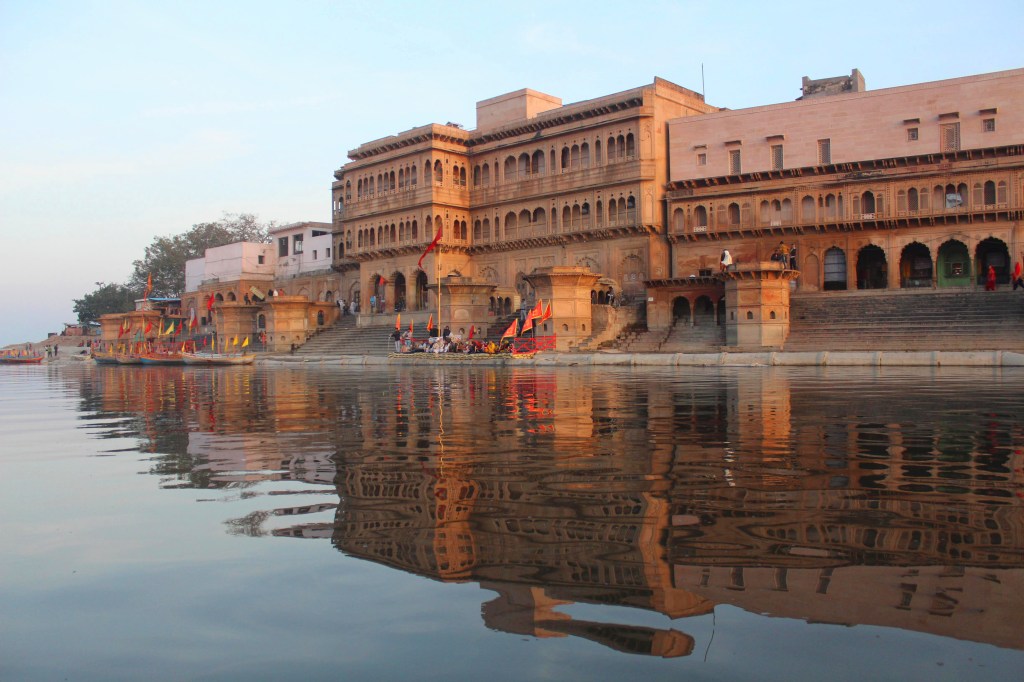
While Varanasi might still be called as a success story, cities like Vrindavan are in the process of losing that iconic character. In January of 2020, I spent about five days exploring the streets of Vrindavan, a city that has still managed to retain some of its divinity even after all the assaults made on it in the name of development. The name of the city has been derived from Vrinda (meaning basil or tulsi) and van (meaning grove). Yamuna River makes an eccentric bend here and that is why the town stands on a peninsula, washed on three sides by the river. The holy city is synonymous to Lord Krishna as he spent most of his childhood days here. It is mentioned in all the Puranas as one of the chief tirtha, or one of the important places of pilgrimage in Braj. Glory of the place was lost until 16th century, when many saints and scholars like Chaitanya Mahaprabhu travelled in the region in order to rediscover the places associated with Radha and Krishna’s life. As these places were rediscovered, Vrindavan saw a huge surge in construction activities as patrons starts establishing temples, shrines, and ghats. The Gazetteer of Mathura (1911) records that there were about 1000 temples in the settlement (mostly private) and 32 ghats.
With this information at hand and having visited Varanasi before, I had the same picture in mind for the riverfront of Vrindavan. At the end of the first day in the city, I along with my team mates ended up at Keshi Ghat which is one of the most important ghats of Vrindavan. We hired a boat and I sat there admiring the scenery which was basking in the glow of the setting sun. Rising mist from the water, ghats and the appalling structures, and the serene countryside on the opposite banks were a scene to behold; something that I have never hoped to experience while boating in the filthy waters of Yamuna. Soon after, priests started the ritual of evening Yamuna Aarti and the day ended on a beautiful note.
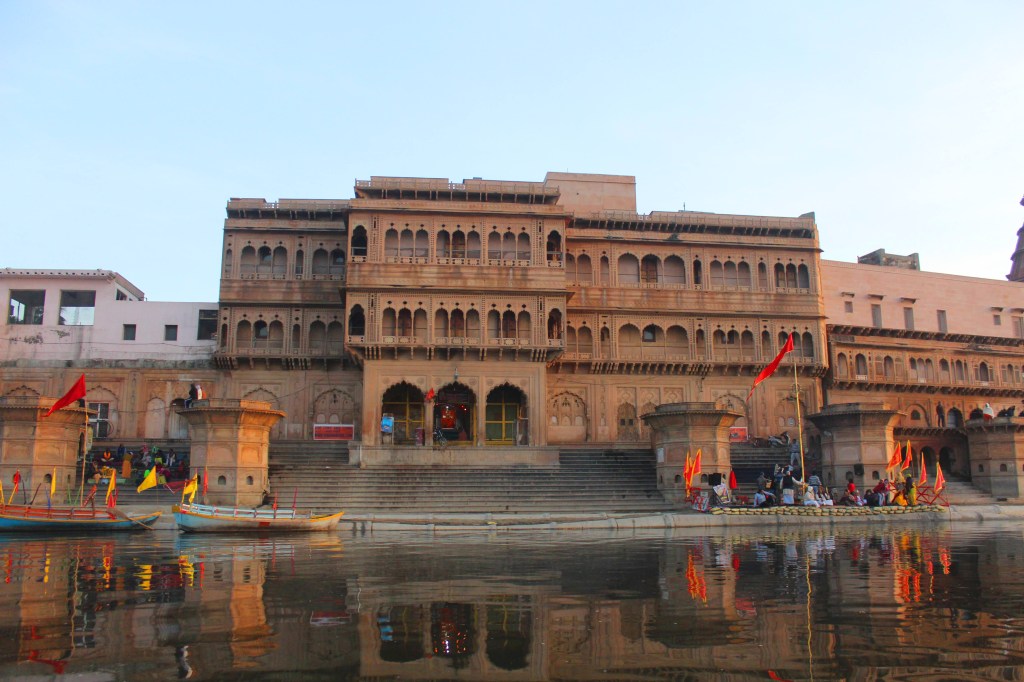
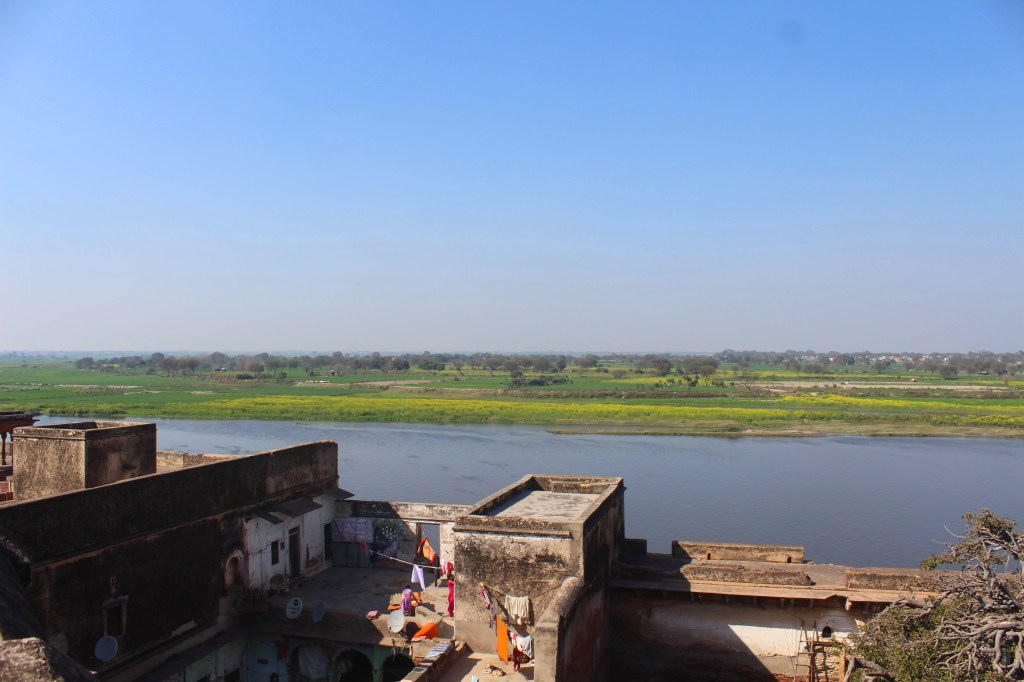
Second day started at the Keshi Ghat and I was excited to see all the structures that I have seen from the boat. It is crucial to mention that while admiring the beautiful scenery around me, I had failed to notice one of most important thing of the riverfront and I was going to find that out now, rather painfully. In my mind I was imagining a continuous series of ghats, just like Varanasi. However, after crossing Keshi Ghat, we ended up on a road with temporary structures all along river side. I was aghast, where were the Ghats? I was not sure of what I was seeing but after walking for a couple of minutes I understood the sad reality and I would like to explain that by going a few years back.
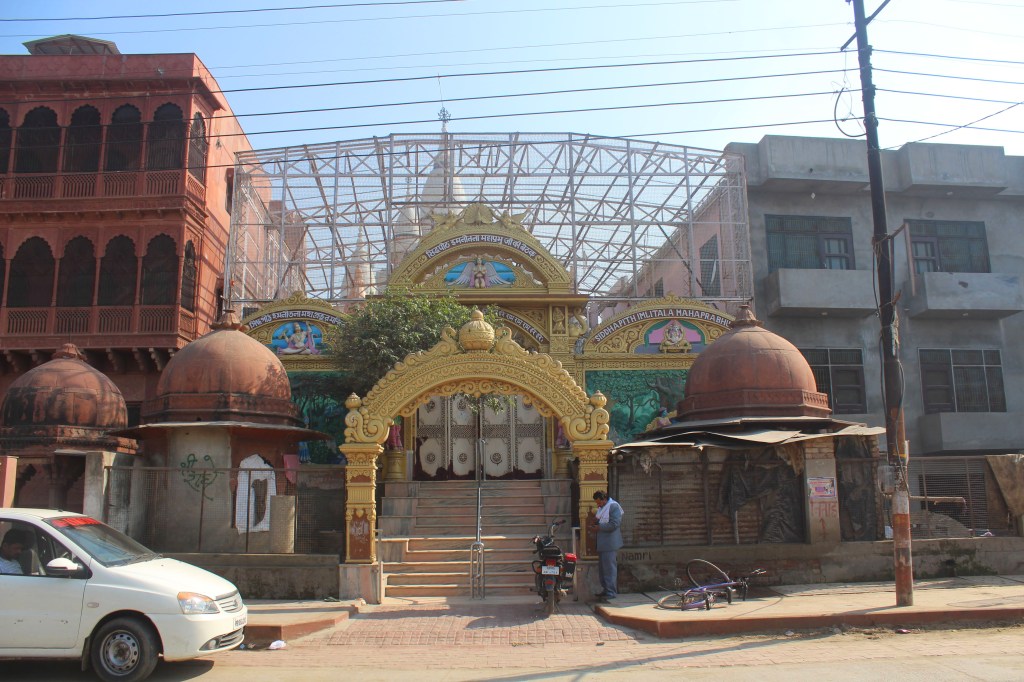
Image Credits – Anushka Patel
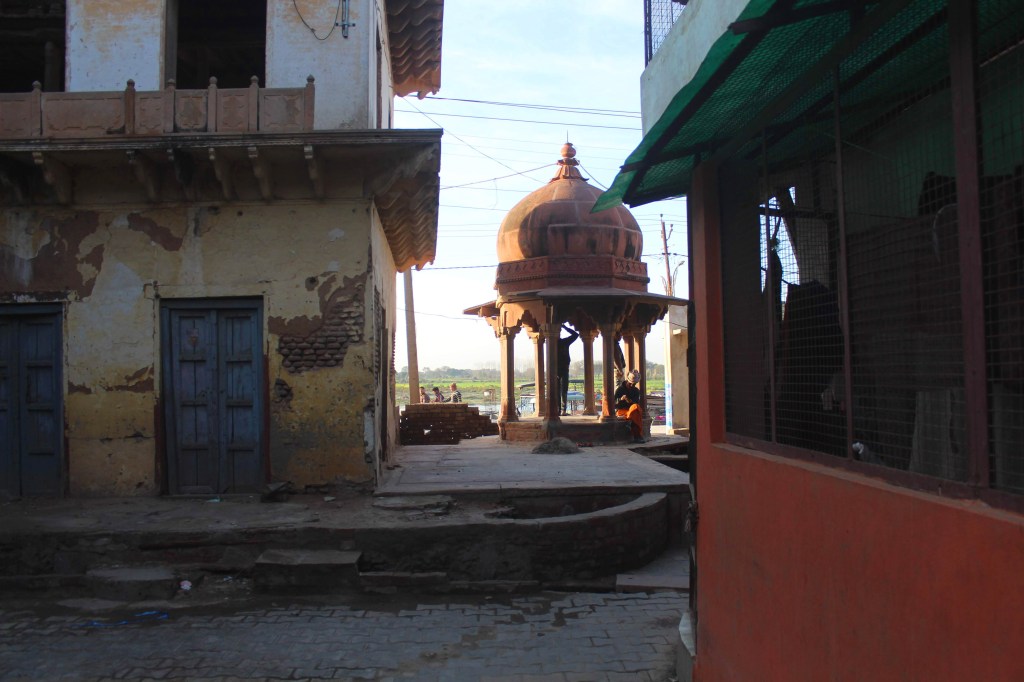
Image Credits – Anushka Patel
In the year around 2010, real state started booming in Vrindavan which led to a lot of construction activities, resulting in construction debris. Local authorities being clueless as to how to dispose of the debris, they decided to dump it along the Yamuna River front. It will also be worthwhile to mention that the river had shifted slightly to the northern direction, leaving a huge space in front of the ghats which might have led to this catastrophic decision. Above this debris, a road was constructed which goes all along the river side and the ghats lost their context. While many of them were buried leaving only the chhatris, retaining walls were constructed around some of the ghats which now give them the appearance of a kund or tank.
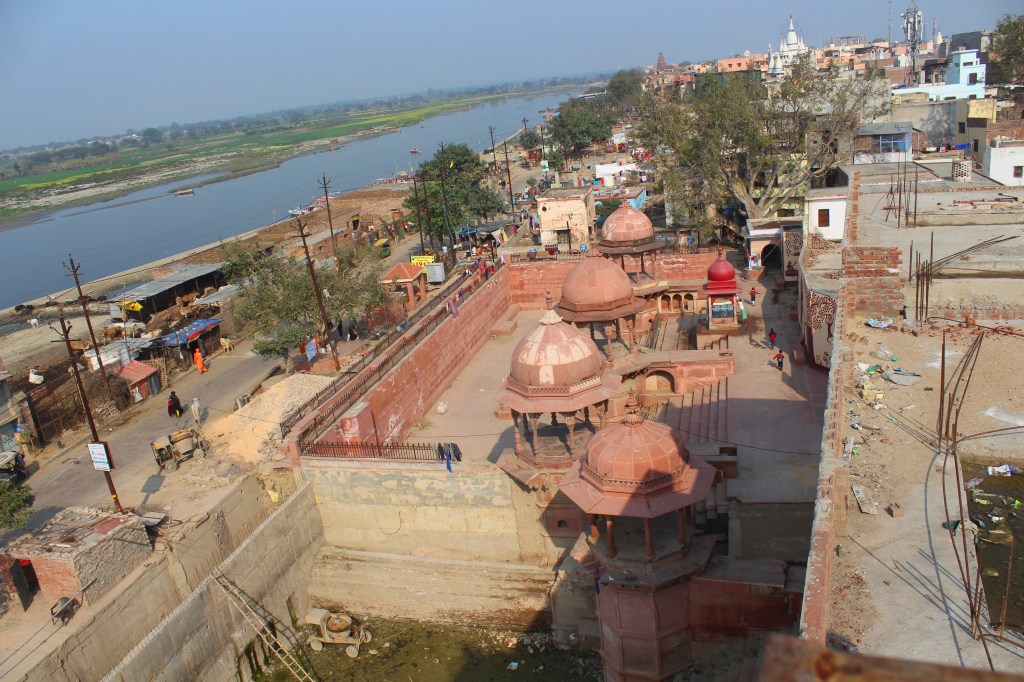
Image Credits – Anushka Patel
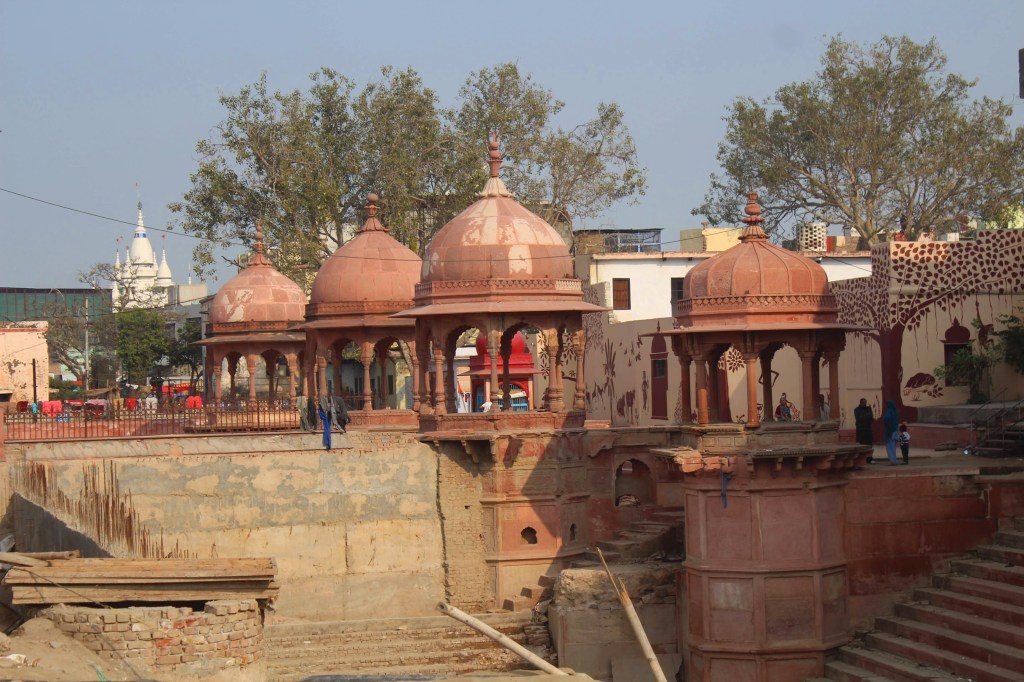
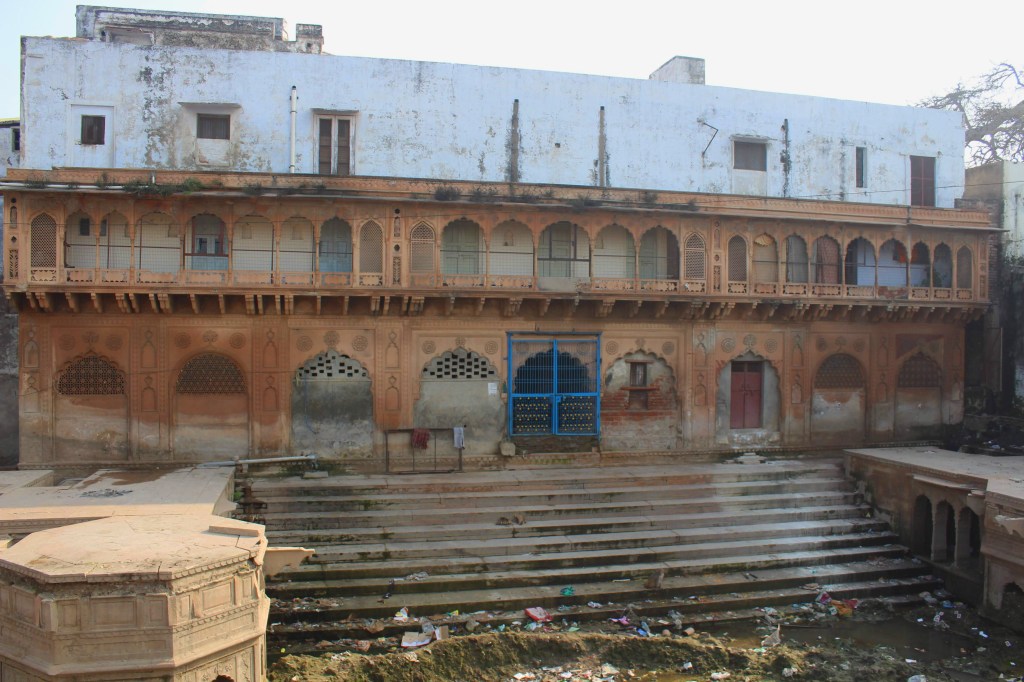
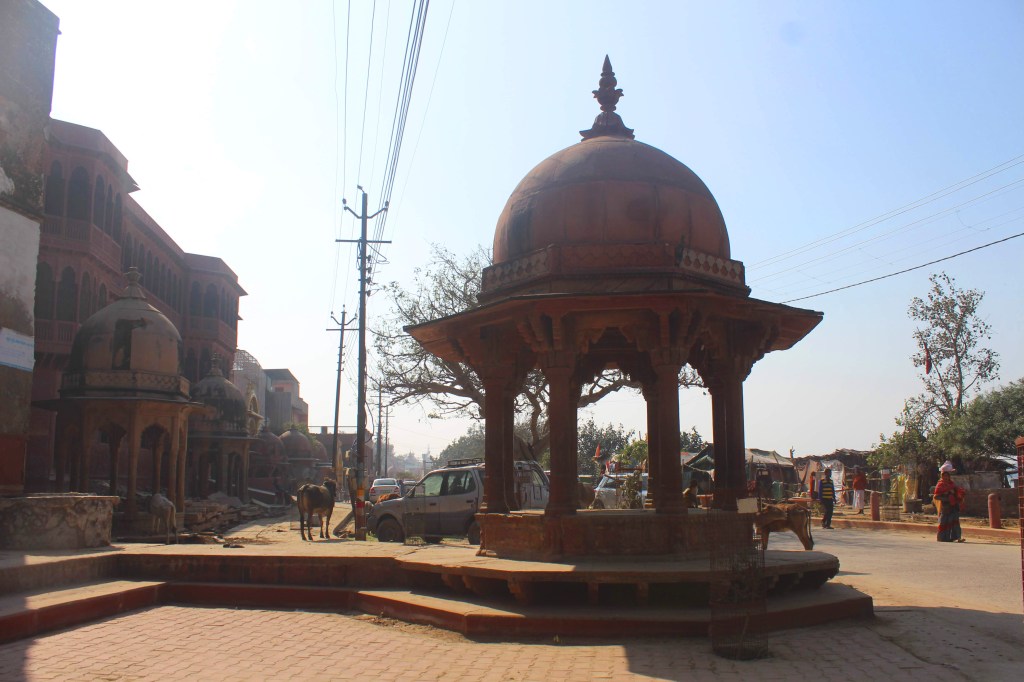
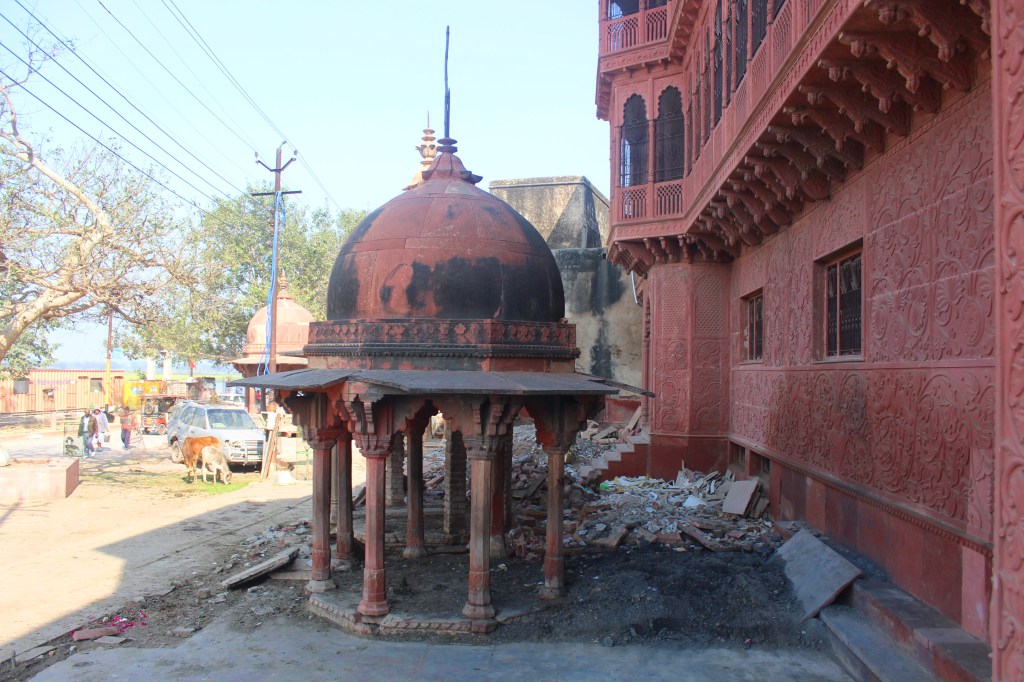
Image Credits – Anushka Patel
In spite of all the onslaught, there were two other disastrous decision that the state government was planning; first was to demolish the heritage sites along the ghats and build a series of cemented ghats while the second was to build an interceptor canal on flood plain of Yamuna River to carry the sewage of neighboring city Kosi Kalan and dump it into the river at Vrindavan. With the effort of few organizations and concerned citizens, the National Green Tribunal stayed the order of construction in November 2016. Although the ghats were built over by this time, it gives a solace in knowing that a proposal that had major environmental repercussions have been in check till now and I hope it stays the same.
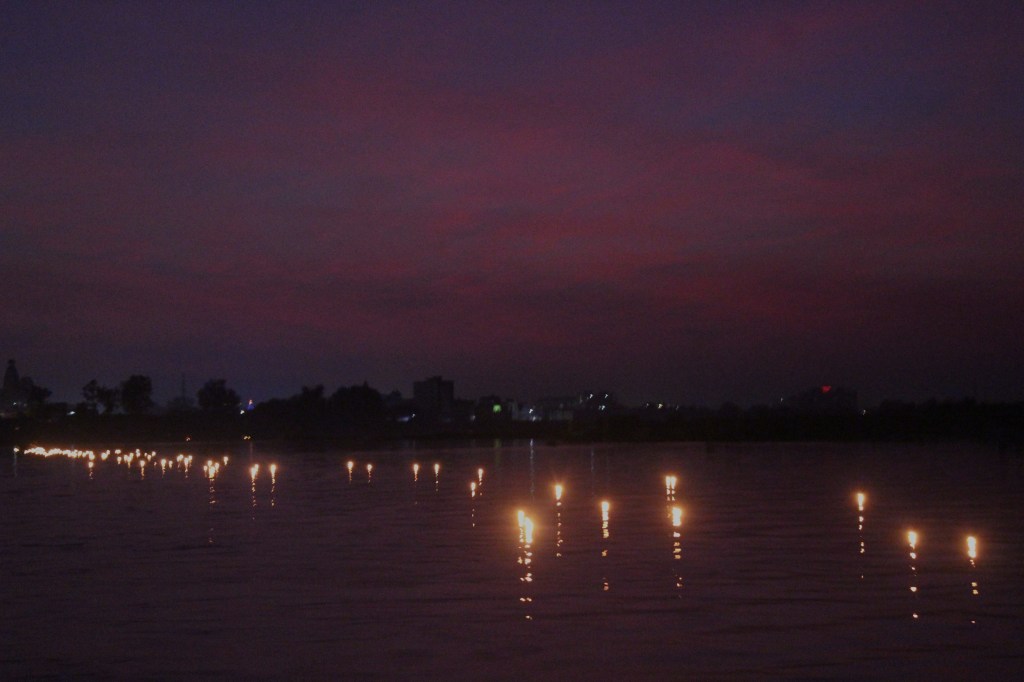
We ended the second day by repeating the activities of the first day. We kept sitting on the boat even after the end of Yamuna Aarti and it was growing dark. Like the previous day, fog had started engulfing us from all around but suddenly we spotted a lot of diyas (earthen lamps) floating towards us. One of the team mates informed us that it is ritual known as deep daan, where a devotee sets off diyas in the river as a gesture to thank the god for fulfilling his/her wish. As all of those little lamps embarked on their journey and their light eventually faded upstream in the growing darkness and fog, I couldn’t help but wonder if we have inscribed the same fate for the natural and cultural heritage of our country………. eventually fading into the darkness!
Sources:
- Brockman, D.L. Drake -. 1911. Muttra, A Gazetteer.
- Growse, F.S. 2000. Mathura – Brindaban, The Mystical Land of Lord Krishna. New Delhi: Diamond Pocket Books Pvt Ltd.
- Growse, F.S. 1883. Mathura: A District Memoir. North-Western Provinces and Oudh Government Press.
- Sehgal, Rashme. 2017. “Heritage dies on Vrindavan’s Ghats.” The Hindu, February 25.
 Echoes of Time