
Gurugram, or Gurgaon, as it is was previously known, is a city of bling. Known for its Cyber Park, rapid metros, and high rise with glass facade, the city has experienced large scale development in the last two decades. However, there is a side of this futuristic city that most of us are not aware about and that is its historic fabric. Even I, who as a heritage professional has loved exploring the nooks and corners of Delhi, had never thought of discovering the hidden gems of Gurgaon’s past as I had also conveniently ignored it. But I was jolted out of my reverie when back in 2018 a news shocked every conservation architect of the city.
Badshahpur, a small village located in the present sector 66 of Gurugram got absorbed in the municipal boundary of the city in 2012 and high-rise housing started to develop in the neighborhood. With the construction of a sector road in 2018, a Mughal era bawdi or baoli (stepwell) was about to be lost forever when the timely intervention of professionals all across the city prevented its destruction. The next year brought another bad news as construction of multilevel parking was approved at Sadar Bazar and Kaman Sarai which would result in demolition of two of the important colonial heritage sites of the city. In the same year, I was approached for a project related to a historic site of the city and is known as John Hall.
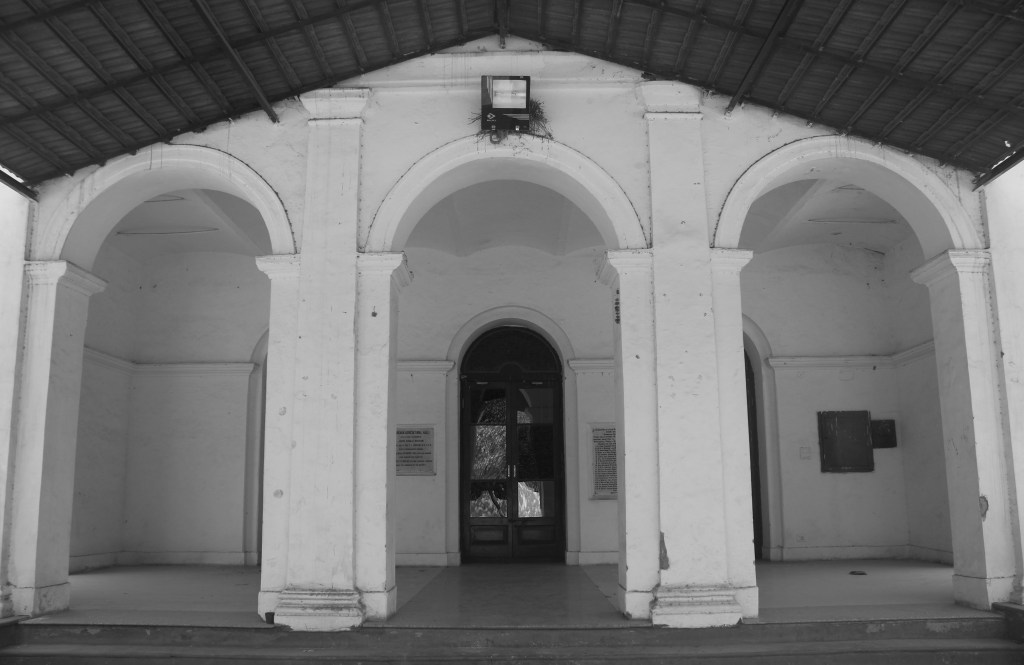
Like the aforementioned sites, I had never heard of it and in order to understand the context of the project, I decided to make myself familiar with the city and its history. After a brief reading, I realized that it is ironic that we have always tried to understand the impact of political environment of Delhi on cities such as Agra, Ajmer, and Jaipur but a city just located 45 km from Delhi, has never been in the picture.
If I could narrate a brief history of Gurugram, it would go something like this. Earliest reference of Gurugram can be seen in Mahabharata, where Yudhishthira gives the land to Guru Dronacharya in the form of guru dakshina and that’s how the village came to be known as ‘Guru Gram’ which later transformed into Gurgaon. From Sultanate period till the age of Babar, this region saw a constant influence of Mewatis, a community of Muslim Rajputs, most importantly led by Bahadur Nahar Khan of Khanzada Dynasty. However, during Akbar’s reign, the region fell under suba of Delhi. In the latter half of 18th century, jagir of Jharsa – Badshahpur was acquired by Begum Samru and she built a cantonment along with other structures. It was during this time that British Raj started becoming more active in the region, so around 1803, civil offices were transferred from Bharawas (near Rewari) to the Civil Lines area of Gurgaon to keep an eye on Begum Samru’s cantonment. Gurgaon was basically a village until it was made a district in 1821 and that’s when a lot of construction happened here such as Sadar Bazar, two sarais, jail, post office, church, bungalows, and a community hall named as John Hall.
John Hall is closely associated with an eminent personality of colonial era, known as Frank Lugard Brayne who was an ICS British officer posted in Gurgaon in 1920 as the Deputy Commissioner of the region. F.L. Brayne had a plan in his mind known as ‘The Gurgaon Experiment’ where he believed that Gurgaon can be made a model village and district of the Indian Empire. He spent his days of service in the village reconstruction as per his plans and his scheme was greatly appreciated at the time. Local citizens adored him for his determination and they expressed it by building an agricultural hall in 1925, in the honour of his deceased son John Goble Brayne who died at an early age. Originally known as Gurgaon Agricultural Hall, the hall was renamed as John Hall and is presently known by the same name. Two plaques, embedded in the walls of the structure gives details of its construction. The hall was built by Rai Sahib Dhanpat Rai, Tehsildar of Gurgaon from subscriptions raised by Lala Shiv Shankar, Revenue Assistant of Gurgaon. Donations were collected from zamindars of the district and name of some of the donors are displayed on the second plaque.

Presently, the site is located in the Civil Lines of Gurugram which is relatively a quiet and green area as compared to the rest of the city. Like every British Cantonment in the country, the area is characterized by wide roads and boulevards shaded by large trees, European bungalows, and green areas. The site is bound by roads on three sides; main entrance to the site is from eastern direction. The site also includes a war memorial on the north-eastern corner, with an open space on the western side.
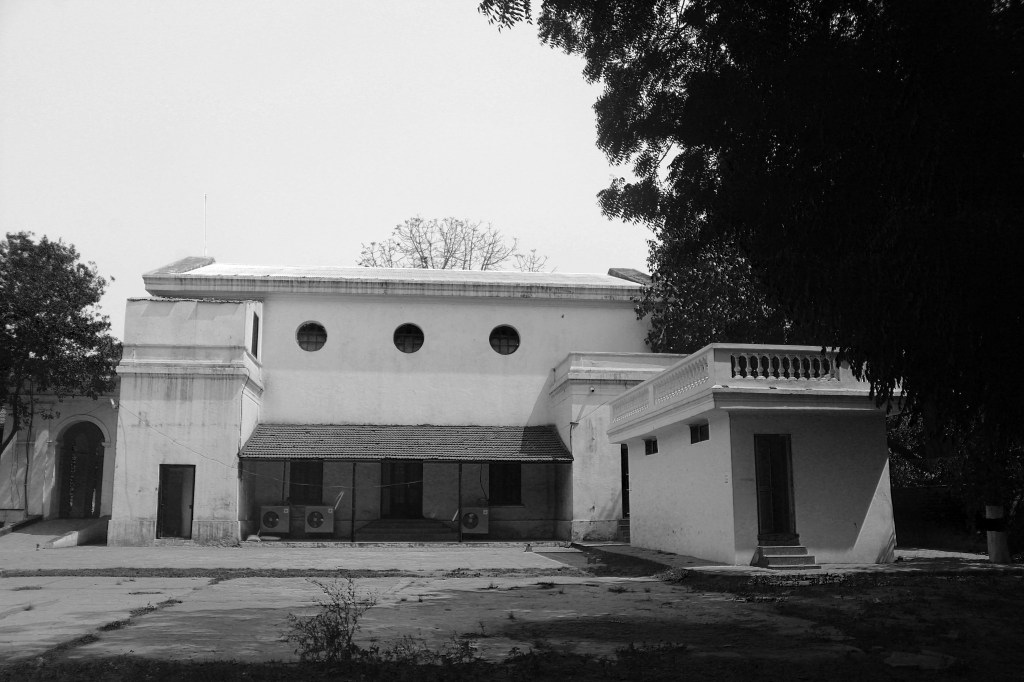
The construction of John Hall was completed in 1925, while the British were still ruling India, hence this structure is an example of colonial architecture. Glimpses of neoclassical architectural style can be seen in this building. Neoclassical architecture emerged as a result of neoclassical movement in mid eighteenth century. It’s a style derived from architecture of classical antiquity and Vitruvian principles. The characteristics of this style is grandeur of scale, simplicity of geometric forms, Greek or Roman details, dramatic use of columns and preference of blank walls. John Hall, although not entirely neoclassical in nature, does have certain elements of the architectural style which can be seen in symmetry of spaces, dramatic use of columns, and in the details of column and cornice bands.

It is rectangular shaped structure with two extensions to the main structure on either side making the structure symmetrical. It has a porch leading to the ground floor of the hall through three arched doors, while in north and south side there is one arched door respectively for accessing the ground floor. The first floor includes a terrace and a balcony seating overlooking the interior space of hall which is accessed via spiral staircases located on either side of porch.

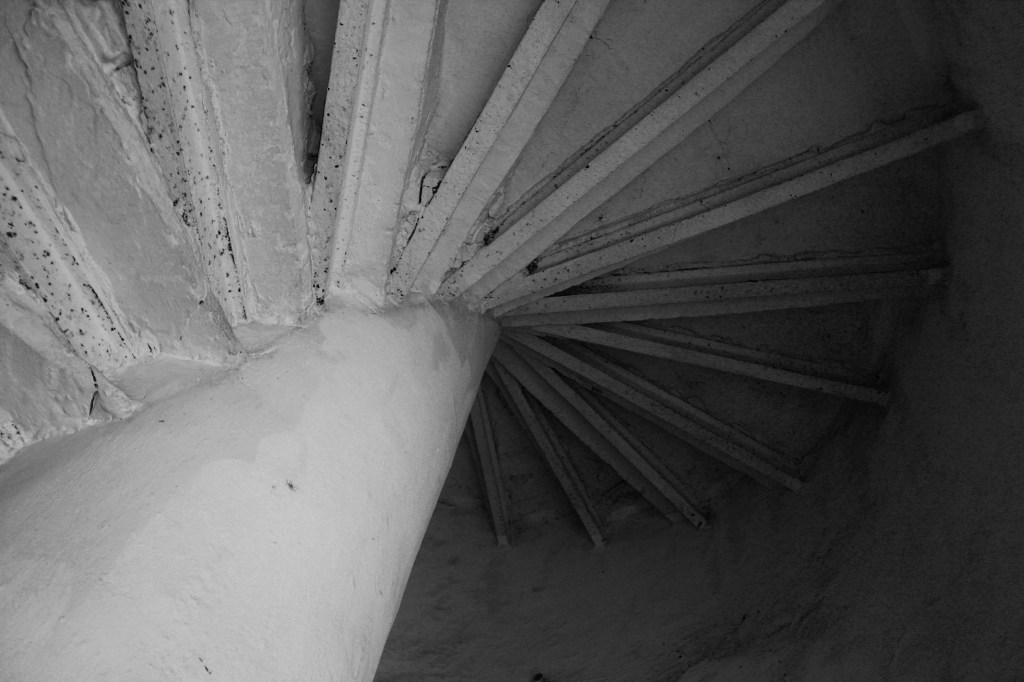
The arches used throughout the building are semicircular in style. The porch and rooms at north-east and south-west corner have jack arch roofing system supported by I-sections in between. Original design of doors and windows are intact, which were originally adorned with textured tinted glass. The first floor balcony facing hall and beautiful wooden railing and highlight of this railing is wooden baluster which are of original design and are in good condition even now. The structure has a sloping roof with cornice bands running on all four elevations of the structure. The pediment of the structure is supported by a detailed entablature.
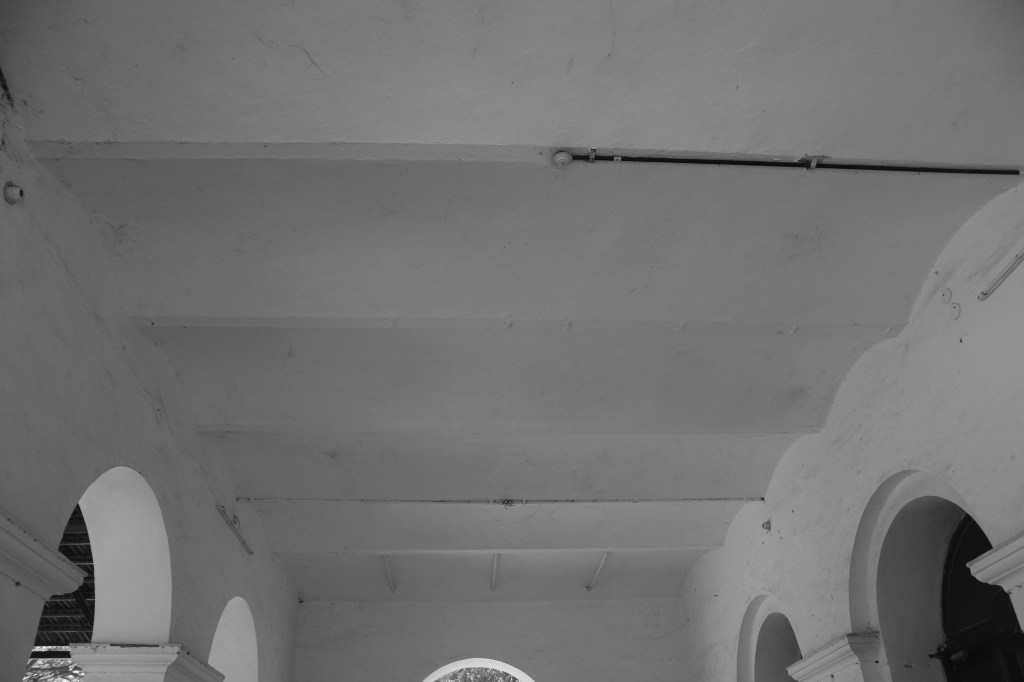
Although the interiors of the structure have been altered over the years, John Hall is one of the best preserved historic sites of Gurugram including Epiphany Church which is located at a distance of about 500 metres from the site. If not for its location and the official use of the structure, the site might have suffered the same fate as other historic sites of the city; shattered in the name of development.
Sources:
- 2017. Haryana Tourism. Accessed June 15, 2019. http://www.haryanatourism.gov.in/Destination/john-hall.
- Khan, Rameen. 2019. “Hidden Monuments of Corporate Gurgaon.” Live History India. March 31. Accessed June 20, 2021. https://www.livehistoryindia.com/story/cover-story/gurugram-daughter-of-serendipity/.
- Oldenburg, Veena Talwar. 2018. Gurgaon – From Mythic Village to Millennium City. Delhi: Harper Collins.
Featured Image Credits – Neha Mallick
Neha Mallick is a Conservation Architect and presently an Assistant Professor at Sushant School of Art and Architecture.
 Echoes of Time